Volume 1, Issue 2


Volume 1, Issue 2 (December, 2025) – 5 articles
Citations: 0, 0,  0   |   Viewed: 3990, Download: 830

Table of Contents

Open Access | Research Article | 11 November 2025
Towards AI-Augmented Software Engineering: A Theoretical Framework
ICCK Journal of Software Engineering | Volume 1, Issue 2: 124-138, 2025 | DOI: 10.62762/JSE.2025.407864
Abstract
Software Engineering (SE) has traditionally relied on rule-based methods and human expertise to deliver reliable systems. As software systems grow more complex and the demand for intelligent and scalable solutions increases, Artificial Intelligence (AI) has emerged as a transformative approach. In particular, Machine Learning (ML) and Deep Learning (DL) play a central role in this shift. This paper proposes a theoretical framework for AI-augmented Software Engineering. It emphasizes the role of machine learning and deep learning across the entire software engineering lifecycle including requirement analysis, design, development, testing, maintenance, project management, and process improveme... More >

Graphical Abstract
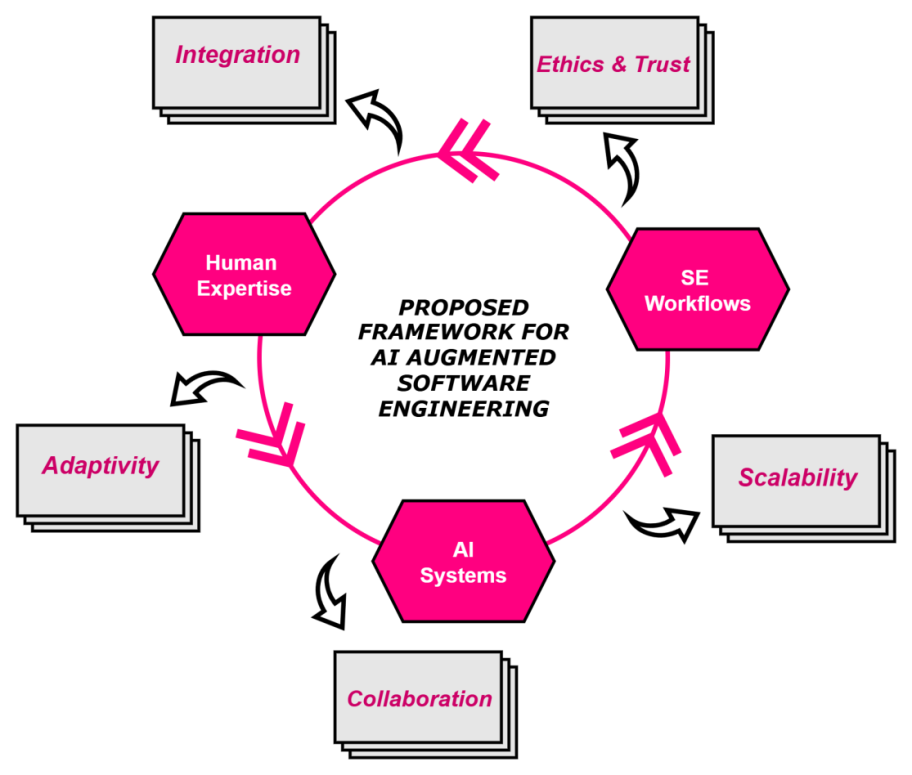
Towards AI-Augmented Software Engineering: A Theoretical Framework
Open Access | Research Article | 03 November 2025
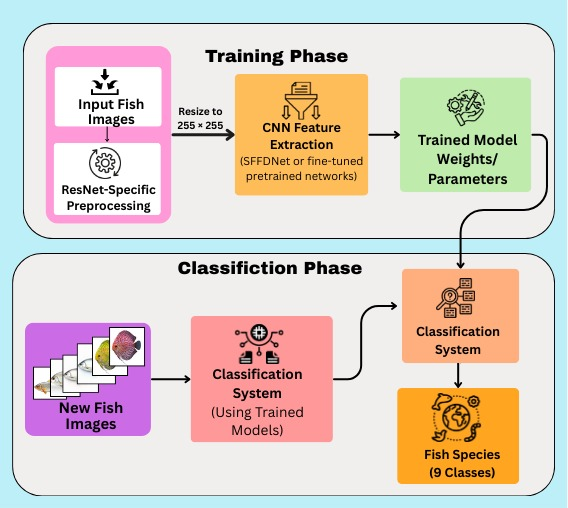
Design and Implementation of a Software Engineering-Driven Deep Transfer Learning Framework for Seafood Fish Detection
ICCK Journal of Software Engineering | Volume 1, Issue 2: 109-123, 2025 | DOI: 10.62762/JSE.2025.535801
Abstract
Seafood quality inspection is critical for ensuring food safety and minimizing economic losses from spoilage. While traditional methods are slow and labor-intensive, computer vision and machine learning have emerged as efficient automated alternatives. This study presents SFFDNet, a software engineering-driven convolutional neural network featuring a lightweight 19-layer architecture with optimized feature extraction blocks and regularization strategies. With only 2.49 million parameters—significantly fewer than VGG16 (138M) and ResNet50 (25.6M)—our model achieves 98.80% accuracy on the Large-Scale Fish Segmentation and Classification Dataset. SFFDNet outperforms both transfer learning m... More >

Graphical Abstract
Design and Implementation of a Software Engineering-Driven Deep Transfer Learning Framework for Seafood Fish Detection
Open Access | Review Article | 02 November 2025
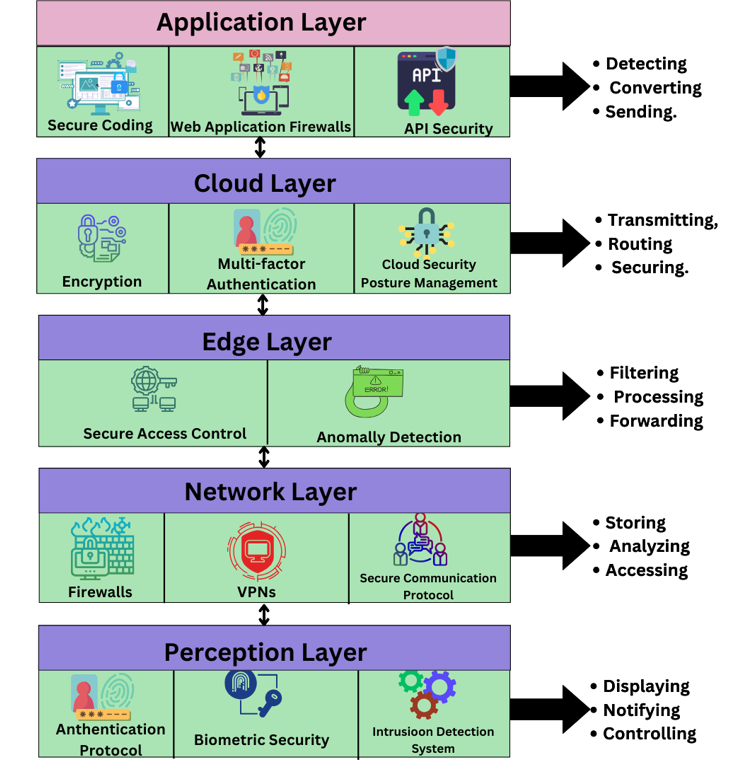
IoT Security through ML/DL: Software Engineering Challenges and Directions
ICCK Journal of Software Engineering | Volume 1, Issue 2: 90-108, 2025 | DOI: 10.62762/JSE.2025.372865
Abstract
The Internet of Things (IoT) is increasingly integrated into modern software-driven systems across consumer, industrial, and healthcare domains. The heterogeneity of IoT devices, combined with their resource constraints, often renders conventional software security mechanisms insufficient, exposing systems to breaches and exploitation. This study examines recent IoT security incidents to illustrate common vulnerabilities in software-intensive IoT ecosystems, highlighting the resulting risks to critical applications. In response, we review emerging machine learning (ML)-driven security modules and deep learning (DL)-based intrusion detection software, positioning them as adaptive components t... More >

Graphical Abstract
IoT Security through ML/DL: Software Engineering Challenges and Directions
Open Access | Review Article | 31 October 2025
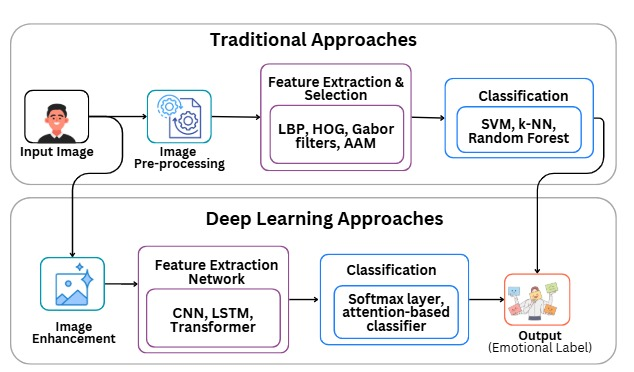
A Comprehensive Review on Software Architectures for Facial Emotion Recognition Using Deep Learning Techniques
ICCK Journal of Software Engineering | Volume 1, Issue 2: 75-89, 2025 | DOI: 10.62762/JSE.2025.285106
Abstract
Facial Emotion Recognition (FER) software is an important part of modern software applications. It is used for intelligent user interfaces, diagnostics in psychiatry or psychology, human-computer interaction, and even in surveillance. The recent advancements in the use of deep learning, and the advanced architectures based on them, including Convolutional Neural Networks (CNNs) and transformer models have made the development of FER software much efficient and scalable. This review paper contributes to the existing literature by providing a comprehensive synthesis of Facial Emotion Recognition (FER) systems from a software engineering perspective spanning the period from 2015 to the present.... More >

Graphical Abstract
A Comprehensive Review on Software Architectures for Facial Emotion Recognition Using Deep Learning Techniques
Open Access | Research Article | 24 October 2025
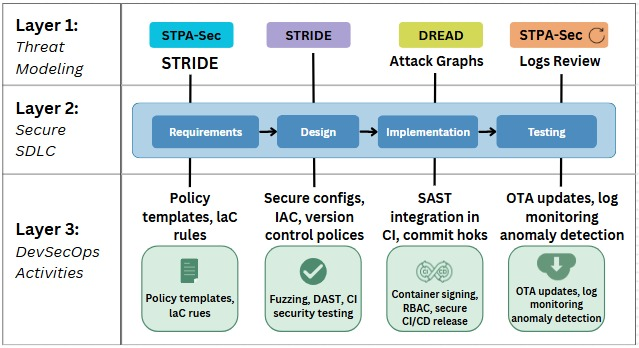
Secure Software Engineering for Industrial IoT: Integrating Threat Modeling into the Development Lifecycle
ICCK Journal of Software Engineering | Volume 1, Issue 2: 63-74, 2025 | DOI: 10.62762/JSE.2025.729568
Abstract
The Industrial Internet of Things (IIoT) is central to smart manufacturing, enabling real-time automation, data exchange, and system intelligence. However, the convergence of cyber-physical systems with legacy software and heterogeneous architectures introduces significant security challenges. This paper explores how software engineering principles can be strategically employed to enhance IIoT security by integrating threat modeling into the development lifecycle. In this study, we review classic models such as STRIDE, DREAD, and STPA-Sec, and evaluate their effectiveness when applied at various phases of the Secure Software Development Life Cycle (SSDLC). STRIDE focuses on classifying secur... More >

Graphical Abstract
Secure Software Engineering for Industrial IoT: Integrating Threat Modeling into the Development Lifecycle