
Three-Dimensional Trajectory–Speed–Energy Co-Optimization for XLUUVs Based on Feasible-Seed-Constrained Particle Swarm Optimization



Article Information
Abstract
Long-range extra-large unmanned underwater vehicles (XLUUVs) require coordinated trajectory, speed, and hybrid energy management under spatially varying currents and operational constraints. This study develops a three-dimensional trajectory--speed--energy co-optimization framework using particle swarm optimization (PSO). Lateral trajectory points, segment-wise depths and speeds, and fuel cell power biases are jointly optimized within a mission-level current, propulsion, hydrogen-consumption, and battery state-of-charge ($SOC$) model. Sequential depth repair enforces the 100 m adjacent-segment depth-change limit, and feasibility-first selection coordinates the remaining operational constraints. In a 15,000 km analytical-current scenario, all ten complete co-optimization runs are feasible. Their mean hydrogen consumption is 23190.76 kg, a 30.34% reduction relative to the fixed-operation baseline, with a sample standard deviation of 700.81 kg. The sequential baseline achieves a 32.19% saving, and sensitivity studies show that the contributions of depth freedom, current-field adaptation, and power allocation depend on the tested environmental and energy-system conditions. These results quantify mission-level performance under the adopted discretized model.
Graphical Abstract
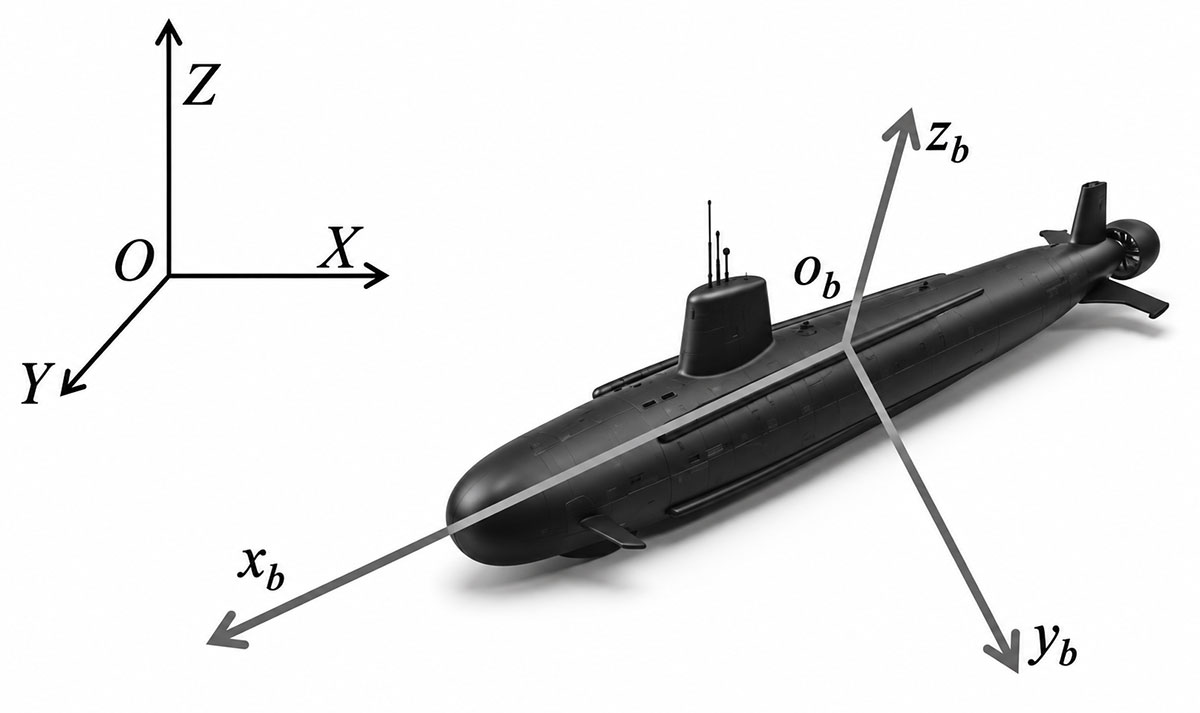
Keywords
Data Availability Statement
Funding
Conflicts of Interest
AI Use Statement
Ethical Approval and Consent to Participate
References
- Button, R. W., Kamp, J., Curtin, T. B., & Dryden, J. (2009). A Survey of Missions for Unmanned Undersea Vehicles (MG-808-NAVY). RAND Corporation, Santa Monica, CA. https://www.rand.org/pubs/monographs/MG808.html
[Google Scholar] - O'Rourke, R. (2025). Navy Large Unmanned Surface and Undersea Vehicles: Background and Issues for Congress (CRS Report No. R45757). Congressional Research Service, Washington, DC. https://www.congress.gov/crs-product/R45757
[Google Scholar] - Sahoo, A., Dwivedy, S. K., & Robi, P. S. (2019). Advancements in the Field of Autonomous Underwater Vehicle. Ocean Engineering, 181, 145–160.
[CrossRef] [Google Scholar] - Lin, Z., Qin, D., Huang, Q., Dong, H., & Pan, G. (2026). Review of Energy Technologies for Unmanned Underwater Vehicles. Energies, 19(3), 592.
[CrossRef] [Google Scholar] - Liu, S., Wang, Z., Wang, T., Zhou, S., Zhang, Y., Jin, P., & Yang, G. (2025). Energy-Optimized Path Planning for Fully Actuated AUVs in Complex 3D Environments. Journal of Marine Science and Engineering, 13(7), 1269.
[CrossRef] [Google Scholar] - Wang, X., Shang, J., Luo, Z., Tang, L., Zhang, X., & Li, J. (2012). Reviews of Power Systems and Environmental Energy Conversion for Unmanned Underwater Vehicles. Renewable and Sustainable Energy Reviews, 16(4), 1958–1970.
[CrossRef] [Google Scholar] - Chiche, A., Lindbergh, G., Stenius, I., & Lagergren, C. (2021). A Strategy for Sizing and Optimizing the Energy System on Long-Range AUVs. IEEE Journal of Oceanic Engineering, 46(4), 1132–1143.
[CrossRef] [Google Scholar] - Deutsch, C., Chiche, A., Bhat, S., Lagergren, C., Lindbergh, G., & Kuttenkeuler, J. (2022). Evaluation of Energy Management Strategies for Fuel Cell/Battery-Powered Underwater Vehicles Against Field Trial Data. Energy Conversion and Management: X, 14, 100193.
[CrossRef] [Google Scholar] - Mendez, A., Leo, T. J., & Herreros, M. A. (2014). Current State of Technology of Fuel Cell Power Systems for Autonomous Underwater Vehicles. Energies, 7(7), 4676–4693.
[CrossRef] [Google Scholar] - Psaraftis, H. N., & Kontovas, C. A. (2014). Ship Speed Optimization: Concepts, Models and Combined Speed-Routing Scenarios. Transportation Research Part C: Emerging Technologies, 44, 52–69.
[CrossRef] [Google Scholar] - Barreiro, J., Zaragoza, S., & Diaz-Casas, V. (2022). Review of Ship Energy Efficiency. Ocean Engineering, 257, 111594.
[CrossRef] [Google Scholar] - Fan, A. L., Yang, J., Yang, L., Liu, W. Q., & Vladimir, N. (2022). Joint Optimisation for Improving Ship Energy Efficiency Considering Speed and Trim Control. Transportation Research Part D: Transport and Environment, 113, 103527.
[CrossRef] [Google Scholar] - Li, X. H., Sun, B. Z., Jin, J. H., & Ding, J. (2022). Speed Optimization of Container Ship Considering Route Segmentation and Weather Data Loading: Turning Point-Time Segmentation Method. Journal of Marine Science and Engineering, 10(12), 1835.
[CrossRef] [Google Scholar] - Yuan, Y. P., Wang, X. Y., Tong, L., Yang, R., & Shen, B. Y. (2023). Research on Multi-Objective Energy Efficiency Optimization Method of Ships Considering Carbon Tax. Journal of Marine Science and Engineering, 11(1), 82.
[CrossRef] [Google Scholar] - Wang, N., & Li, Z. Q. (2025). PSO-Based Speed and Power Allocation Strategy Collaborative Optimization Method for Hydrogen Fuel Cell Ships. Chinese Journal of Ship Research, 20(3), 211–222 (in Chinese).
[CrossRef] [Google Scholar] - Yan, X., Wang, K., Yuan, Y., Jiang, X., & Negenborn, R. R. (2018). Energy-efficient shipping: An application of big data analysis for optimizing engine speed of inland ships considering multiple environmental factors. Ocean Engineering, 169, 457-468.
[CrossRef] [Google Scholar] - Petres, C., Pailhas, Y., Petillot, Y., & Lane, D. (2005, June). Underwater path planing using fast marching algorithms. In Europe Oceans 2005 (Vol. 2, pp. 814-819). IEEE.
[CrossRef] [Google Scholar] - Garau, B., Alvarez, A., & Oliver, G. (2005). Path Planning of Autonomous Underwater Vehicles in Current Fields with Complex Spatial Variability: An A* Approach. In Proceedings of the 2005 IEEE International Conference on Robotics and Automation (pp. 194–198). IEEE, Barcelona, Spain.
[CrossRef] [Google Scholar] - Alvarez, A., Caiti, A., & Onken, R. (2004). Evolutionary Path Planning for Autonomous Underwater Vehicles in a Variable Ocean. IEEE Journal of Oceanic Engineering, 29(2), 418–429.
[CrossRef] [Google Scholar] - Witt, J., & Dunbabin, M. (2008). Go with the Flow: Optimal AUV Path Planning in Coastal Environments. In Proceedings of the Australasian Conference on Robotics and Automation (ACRA 2008). https://www.araa.asn.au/acra/acra2008/papers/pap133s1.pdf
[Google Scholar] - Alam, T., Al Redwan Newaz, A., Bobadilla, L., Alsabban, W. H., Smith, R. N., & Karimoddini, A. (2021). Towards energy-aware feedback planning for long-range autonomous underwater vehicles. Frontiers in Robotics and AI, 8, 621820.
[CrossRef] [Google Scholar] - Tang, D., & Wang, H. (2021). Energy management strategies for hybrid power systems considering dynamic characteristics of power sources. IEEE Access, 9, 158796-158807.
[CrossRef] [Google Scholar] - Zhou, S., Fan, L., Zhang, G., Gao, J., Lu, Y., Zhao, P., Wen, C., Shi, L., & Hu, Z. (2022). A Review on Proton Exchange Membrane Multi-Stack Fuel Cell Systems: Architecture, Performance, and Power Management. Applied Energy, 310, 118555.
[CrossRef] [Google Scholar] - Mutarraf, M. U., Terriche, Y., Niazi, K. A. K., Vasquez, J. C., & Guerrero, J. M. (2018). Energy Storage Systems for Shipboard Microgrids—A Review. Energies, 11(12), 3492.
[CrossRef] [Google Scholar] - Hou, J., Sun, J., & Hofmann, H. (2018). Control Development and Performance Evaluation for Battery/Flywheel Hybrid Energy Storage Solutions to Mitigate Load Fluctuations in All-Electric Ship Propulsion Systems. Applied Energy, 212, 919–930.
[CrossRef] [Google Scholar] - Wang, X. Y., Zhu, J. Z., & Han, M. F. (2023). Industrial Development Status and Prospects of the Marine Fuel Cell: A Review. Journal of Marine Science and Engineering, 11(2), 238.
[CrossRef] [Google Scholar] - Song, K., Ding, Y. H., Hu, X., Xu, H. J., Wang, Y. M., & Cao, J. (2021). Degradation Adaptive Energy Management Strategy Using Fuel Cell State-of-Health for Fuel Economy Improvement of Hybrid Electric Vehicle. Applied Energy, 285, 116413.
[CrossRef] [Google Scholar] - Fossen, T. I. (2021). Handbook of Marine Craft Hydrodynamics and Motion Control (2nd ed.). Wiley, Chichester.
[CrossRef] [Google Scholar] - Groves, N. C., Huang, T. T., & Chang, M. S. (1989). Geometric Characteristics of DARPA SUBOFF Models (Report DTRC/SHD-1298-01). David Taylor Research Center, Bethesda. https://www.scribd.com/document/105661195/Geometry-Darpa-Models
[Google Scholar] - Liu, H. L., & Huang, T. T. (1998). Summary of DARPA SUBOFF Experimental Program Data (Report CRDKNSWC/HD-1298-11). Naval Surface Warfare Center, Carderock Division, Bethesda. https://scispace.com/pdf/summary-of-darpa-suboff-experimental-program-data-29apxlb3tz.pdf
[Google Scholar] - Kennedy, J., & Eberhart, R. (1995, November). Particle swarm optimization. In Proceedings of ICNN'95 - International Conference on Neural Networks (Vol. 4, pp. 1942-1948). IEEE.
[CrossRef] [Google Scholar] - Clerc, M., & Kennedy, J. (2002). The particle swarm-explosion, stability, and convergence in a multidimensional complex space. IEEE Transactions on Evolutionary Computation, 6(1), 58-73.
[CrossRef] [Google Scholar]
Cite This Article
TY  - JOUR
AU  - Bo, Peng
AU  - Guo, Qingchang
AU  - Ma, Liran
AU  - Luo, Jianbin
PY  - 2026
DA  - 2026/11/27
TI  - Three-Dimensional Trajectory–Speed–Energy Co-Optimization for XLUUVs Based on Feasible-Seed-Constrained Particle Swarm Optimization
JO  - Aerospace Engineering Communications
T2  - Aerospace Engineering Communications
JF  - Aerospace Engineering Communications
VL  - 1
IS  - 4
SP  - 154
EP  - 171
DO  - 10.62762/AEC.2026.456737
UR  - https://www.icck.org/article/abs/aec.2026.456737
KW  - extra-large unmanned underwater vehicle (XLUUV)
KW  - trajectory–speed–energy co-optimization
KW  - power allocation
KW  - particle swarm optimization (PSO)
AB  - Long-range extra-large unmanned underwater vehicles (XLUUVs) require coordinated trajectory, speed, and hybrid energy management under spatially varying currents and operational constraints. This study develops a three-dimensional trajectory--speed--energy co-optimization framework using particle swarm optimization (PSO). Lateral trajectory points, segment-wise depths and speeds, and fuel cell power biases are jointly optimized within a mission-level current, propulsion, hydrogen-consumption, and battery state-of-charge ($SOC$) model. Sequential depth repair enforces the 100 m adjacent-segment depth-change limit, and feasibility-first selection coordinates the remaining operational constraints. In a 15,000 km analytical-current scenario, all ten complete co-optimization runs are feasible. Their mean hydrogen consumption is 23190.76 kg, a 30.34% reduction relative to the fixed-operation baseline, with a sample standard deviation of 700.81 kg. The sequential baseline achieves a 32.19% saving, and sensitivity studies show that the contributions of depth freedom, current-field adaptation, and power allocation depend on the tested environmental and energy-system conditions. These results quantify mission-level performance under the adopted discretized model.
SN  - 3071-1967
PB  - Institute of Central Computation and Knowledge
LA  - English
ER  -
@article{Bo2026ThreeDimen,
  author = {Peng Bo and Qingchang Guo and Liran Ma and Jianbin Luo},
  title = {Three-Dimensional Trajectory–Speed–Energy Co-Optimization for XLUUVs Based on Feasible-Seed-Constrained Particle Swarm Optimization},
  journal = {Aerospace Engineering Communications},
  year = {2026},
  volume = {1},
  number = {4},
  pages = {154-171},
  doi = {10.62762/AEC.2026.456737},
  url = {https://www.icck.org/article/abs/aec.2026.456737},
  abstract = {Long-range extra-large unmanned underwater vehicles (XLUUVs) require coordinated trajectory, speed, and hybrid energy management under spatially varying currents and operational constraints. This study develops a three-dimensional trajectory--speed--energy co-optimization framework using particle swarm optimization (PSO). Lateral trajectory points, segment-wise depths and speeds, and fuel cell power biases are jointly optimized within a mission-level current, propulsion, hydrogen-consumption, and battery state-of-charge (\$SOC\$) model. Sequential depth repair enforces the 100 m adjacent-segment depth-change limit, and feasibility-first selection coordinates the remaining operational constraints. In a 15,000 km analytical-current scenario, all ten complete co-optimization runs are feasible. Their mean hydrogen consumption is 23190.76 kg, a 30.34\% reduction relative to the fixed-operation baseline, with a sample standard deviation of 700.81 kg. The sequential baseline achieves a 32.19\% saving, and sensitivity studies show that the contributions of depth freedom, current-field adaptation, and power allocation depend on the tested environmental and energy-system conditions. These results quantify mission-level performance under the adopted discretized model.},
  keywords = {extra-large unmanned underwater vehicle (XLUUV), trajectory–speed–energy co-optimization, power allocation, particle swarm optimization (PSO)},
  issn = {3071-1967},
  publisher = {Institute of Central Computation and Knowledge}
}
Article Metrics
Publisher's Note
ICCK stays neutral with regard to jurisdictional claims in published maps and institutional affiliations.
Rights and Permissions
 Copyright © 2026 by the Author(s). Published by Institute of Central Computation and Knowledge. This article is an open access article distributed under the terms and conditions of the Creative Commons Attribution (CC BY) license (https://creativecommons.org/licenses/by/4.0/), which permits use, sharing, adaptation, distribution and reproduction in any medium or format, as long as you give appropriate credit to the original author(s) and the source, provide a link to the Creative Commons licence, and indicate if changes were made.


Portico
