


SAWAOS: Smart Agri-Waste Analysis and Optimization System



Article Information
Abstract
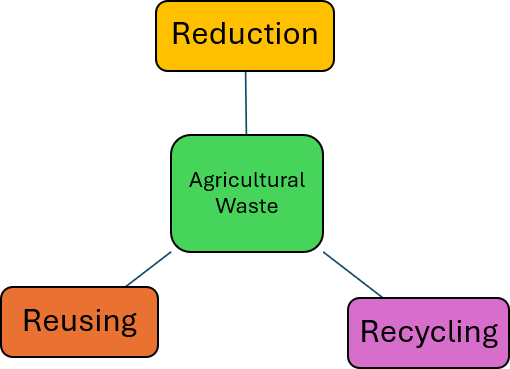
The growing volume of agricultural residues poses significant environmental and economic challenges, while existing waste management practices remain inefficient and unsustainable. This paper presents SAWAOS (Smart Agri-Waste Analysis and Optimization System), an applied AI-based decision-support framework for intelligent agricultural waste utilization. SAWAOS integrates waste characteristics, location information, and domain knowledge to generate context-aware recommendations for composting, bioenergy conversion, and industrial reuse. The system employs an explainable, rule-enhanced AI decision logic suitable for low-data rural environments and incorporates a digital marketplace that directly connects farmers with industries and consumers, supporting circular economy principles. The framework is validated through a functional prototype and case-study-based evaluation using representative agricultural residues. A comparative analysis with existing waste management approaches highlights the advantages of SAWAOS in terms of decision support, stakeholder integration, and scalability. The SAWAOS demonstrates how applied AI can transform agricultural waste from a disposal challenge into a sustainable economic resource.
Graphical Abstract
Keywords
Data Availability Statement
Funding
Conflicts of Interest
AI Use Statement
Ethical Approval and Consent to Participate
References
- Naidu, P. M., Anjali, M., Vaishnavi, K. S., Chandralekha, S., & Reddy, K. T. (2024, September). Agriculture Wastage Management System Using Android Application. In 2024 4th International Conference on Soft Computing for Security Applications (ICSCSA) (pp. 702-708). IEEE.
[CrossRef] [Google Scholar] - Trevisan, C., & Formentini, M. (2023). Digital technologies for food loss and waste prevention and reduction in agri-food supply chains: a systematic literature review and research agenda. IEEE Transactions on Engineering Management, 71, 12326-12345.
[CrossRef] [Google Scholar] - Achieng, M. S. (2023, May). Digital Technologies for Integrated Food Loss and Waste Reduction in Agrifood Chains in Sub-Saharan Africa: A Scoping Review. In 2023 IST-Africa Conference (IST-Africa) (pp. 1-11). IEEE.
[CrossRef] [Google Scholar] - Kholiya, D., Mishra, A. K., Pandey, N. K., & Tripathi, N. (2023, October). Intelligent framework for waste management using blockchain. In 2023 IEEE 11th Region 10 Humanitarian Technology Conference (R10-HTC) (pp. 91-96). IEEE.
[CrossRef] [Google Scholar] - Singh, S. V., Chaturvedi, S., Dhyani, V. C., & Datta, D. (2019). Biochar: An eco-friendly residue management approach. Indian Farming, 69(8).
[Google Scholar] - Taneja, A., Nair, G., Joshi, M., Sharma, S., Sharma, S., Jambrak, A. R., ... & Phimolsiripol, Y. (2023). Artificial intelligence: Implications for the agri-food sector. Agronomy, 13(5), 1397.
[CrossRef] [Google Scholar] - Badavath, A., Rathna, G., Pragnya, N., & Padhy, C. (2024). Exploring Intelligent Technologies for Waste Management: A Comprehensive Literature Review. Journal of Scientific Research and Reports, 30(12), 847-852.
[CrossRef] [Google Scholar] - Singh, N. L., Vishwas, B. R., Singh, S., Bhati, J., Tripathi, S. K., & Kumar, P. (2024). Applications of artificial intelligence (AI) in the field of agriculture: A review. Journal of Scientific Research and Reports, 30(12), 612–620.
[CrossRef] [Google Scholar] - SINGH, B. P., Singh, M., Kumar, V., Reddy, M. B., Chander, M., Shruti, Suman, R. S., & Yadav, V. (2024). Crop Residue Management Initiatives in Changing the Farmers Behaviour and Farm Production in Bareilly district. Indian Journal of Extension Education, 60(1), 73-79.
[CrossRef] [Google Scholar] - Hernandez, D., Pasha, L., Yusuf, D. A., Nurfaizi, R., & Julianingsih, D. (2024). The role of artificial intelligence in sustainable agriculture and waste management: Towards a green future. International Transactions on Artificial Intelligence, 2(2), 150-157.
[CrossRef] [Google Scholar]
Cite This Article
TY  - JOUR
AU  - Banik, Barnali Gupta
AU  - Boddula, Hari Priya
AU  - Chatiri, Shreethu
PY  - 2026
DA  - 2026/03/12
TI  - SAWAOS: Smart Agri-Waste Analysis and Optimization System
JO  - Digital Intelligence in Agriculture
T2  - Digital Intelligence in Agriculture
JF  - Digital Intelligence in Agriculture
VL  - 2
IS  - 1
SP  - 12
EP  - 18
DO  - 10.62762/DIA.2025.690210
UR  - https://www.icck.org/article/abs/DIA.2025.690210
KW  - agricultural waste management
KW  - applied AI
KW  - decision-support systems
KW  - circular economy
KW  - sustainable agriculture
AB  - The growing volume of agricultural residues poses significant environmental and economic challenges, while existing waste management practices remain inefficient and unsustainable. This paper presents SAWAOS (Smart Agri-Waste Analysis and Optimization System), an applied AI-based decision-support framework for intelligent agricultural waste utilization. SAWAOS integrates waste characteristics, location information, and domain knowledge to generate context-aware recommendations for composting, bioenergy conversion, and industrial reuse. The system employs an explainable, rule-enhanced AI decision logic suitable for low-data rural environments and incorporates a digital marketplace that directly connects farmers with industries and consumers, supporting circular economy principles. The framework is validated through a functional prototype and case-study-based evaluation using representative agricultural residues. A comparative analysis with existing waste management approaches highlights the advantages of SAWAOS in terms of decision support, stakeholder integration, and scalability. The SAWAOS demonstrates how applied AI can transform agricultural waste from a disposal challenge into a sustainable economic resource.
SN  - 3069-3187
PB  - Institute of Central Computation and Knowledge
LA  - English
ER  -
@article{Banik2026SAWAOS,
  author = {Barnali Gupta Banik and Hari Priya Boddula and Shreethu Chatiri},
  title = {SAWAOS: Smart Agri-Waste Analysis and Optimization System},
  journal = {Digital Intelligence in Agriculture},
  year = {2026},
  volume = {2},
  number = {1},
  pages = {12-18},
  doi = {10.62762/DIA.2025.690210},
  url = {https://www.icck.org/article/abs/DIA.2025.690210},
  abstract = {The growing volume of agricultural residues poses significant environmental and economic challenges, while existing waste management practices remain inefficient and unsustainable. This paper presents SAWAOS (Smart Agri-Waste Analysis and Optimization System), an applied AI-based decision-support framework for intelligent agricultural waste utilization. SAWAOS integrates waste characteristics, location information, and domain knowledge to generate context-aware recommendations for composting, bioenergy conversion, and industrial reuse. The system employs an explainable, rule-enhanced AI decision logic suitable for low-data rural environments and incorporates a digital marketplace that directly connects farmers with industries and consumers, supporting circular economy principles. The framework is validated through a functional prototype and case-study-based evaluation using representative agricultural residues. A comparative analysis with existing waste management approaches highlights the advantages of SAWAOS in terms of decision support, stakeholder integration, and scalability. The SAWAOS demonstrates how applied AI can transform agricultural waste from a disposal challenge into a sustainable economic resource.},
  keywords = {agricultural waste management, applied AI, decision-support systems, circular economy, sustainable agriculture},
  issn = {3069-3187},
  publisher = {Institute of Central Computation and Knowledge}
}
Article Metrics
Publisher's Note
ICCK stays neutral with regard to jurisdictional claims in published maps and institutional affiliations.
Rights and Permissions
 Copyright © 2026 by the Author(s). Published by Institute of Central Computation and Knowledge. This article is an open access article distributed under the terms and conditions of the Creative Commons Attribution (CC BY) license (https://creativecommons.org/licenses/by/4.0/), which permits use, sharing, adaptation, distribution and reproduction in any medium or format, as long as you give appropriate credit to the original author(s) and the source, provide a link to the Creative Commons licence, and indicate if changes were made.

