

Methanol Treatment for Permeability Restoration in Oil Shale after Water-Induced Permeability Damage


Article Information
Abstract
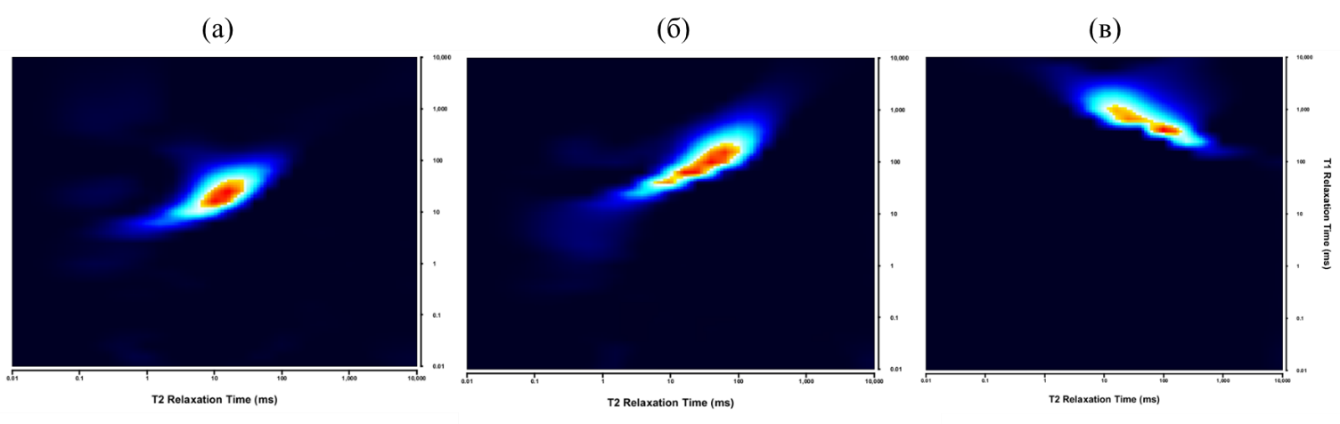
This article presents core-flooding experiments on a Bazhenov Formation core sample designed to evaluate whether post-water methanol treatment can restore permeability. At reservoir conditions (110 °C, 23.5 MPa), the core was first water-flooded and then subjected to oil injection into the water-saturated rock, which caused severe, progressive permeability loss. NMR T1-T2 mapping captured fluid redistribution and the growth of bound/high-viscosity components. Gas chromatography indicated C36+-rich precipitates. A subsequent methanol flush stabilized the pressure drop and restored $\sim$87% of the pre-damage water permeability. These findings elucidate a water-oil-rock interaction pathway for rapid colmatation in Bazhenov shale and demonstrate an effective methanol-based protocol for permeability restoration.
Graphical Abstract
Keywords
Data Availability Statement
Funding
Conflicts of Interest
Ethical Approval and Consent to Participate
References
- Liu, K., Wang, D., Sheng, J. J., & Li, J. (2022). Review of the Generation of Fractures and Change of Permeability due to Water‐Shale Interaction in Shales. Geofluids, 2022(1), 1748605.
[CrossRef] [Google Scholar] - Scerbacova, A., Mukhina, E., Bakulin, D., Burukhin, A., Ivanova, A., Cheremisin, A., ... & Cheremisin, A. (2023). Water-and surfactant-based huff-n-puff injection into unconventional liquid hydrocarbon reservoirs: Experimental and modeling study. Energy & Fuels, 37(15), 11067-11082.
[CrossRef] [Google Scholar] - Peng, Y., Zhang, X., Cheng, L., Zhang, H., Tang, J., Chen, H., ... & Ouyang, X. (2025). Effect of Asphaltenes on the Stability of Water in Crude Oil Emulsions. Materials, 18(3), 630.
[CrossRef] [Google Scholar] - Mukhametdinova, A., Habina-Skrzyniarz, I., & Krzyżak, A. (2021). NMR relaxometry interpretation of source rock liquid saturation—A holistic approach. Marine and Petroleum Geology, 132, 105165.
[CrossRef] [Google Scholar] - Kuang, J., Yarbrough, J., Enayat, S., Edward, N., Wang, J., & Vargas, F. M. (2019). Evaluation of solvents for in-situ asphaltene deposition remediation. Fuel, 241, 1076–1084.
[CrossRef] [Google Scholar] - Mohammadpour, M., Malayeri, M. R., Kazemzadeh, Y., & Riazi, M. (2023). On the impact of oil compounds on emulsion behavior under different thermodynamic conditions. Scientific Reports, 13(1), 15727.
[CrossRef] [Google Scholar] - Mohammed, I., Mahmoud, M., El-Husseiny, A., Al Shehri, D., Al-Garadi, K., Kamal, M. S., & Alade, O. S. (2021). Impact of asphaltene precipitation and deposition on wettability and permeability.ACS omega, 6(31), 20091-20102.
[CrossRef] [Google Scholar] - Rimstidt, D. D., & Vaughan, D. J. (2003). Pyrite oxidation: A state-of-the-art assessment of the reaction mechanism. Geochimica et Cosmochimica Acta, 67(5), 873–880.
[CrossRef] [Google Scholar] - Alomair, O., Al-Dousari, M., Azubuike, N., & Garrouch, A. A. (2023). Evaluation of the impact of low-salinity water on wettability alteration and oil recovery in Berea sandstones. Fuel, 337, 127151.
[CrossRef] [Google Scholar] - Gyimah, E., Rahnema, H., & Rahnema, H. (2024). An experimental study of alcohol injection to mitigate water blockage in commingled layered reservoirs. Petroleum Research, 9(4), 610-619.
[CrossRef] [Google Scholar] - Mukhina, E., Yunusov, T., Yuan, C., Bakulin, D., Martirosov, A., Ushakova, A., ... & Cheremisin, A. (2025). Potential cleaner and greener method for ultra-tight shale oil development without hydraulic fracturing: experimental validation for CO2 and hydrocarbon gas injection. Petroleum Research.
[CrossRef] [Google Scholar]
Cite This Article
TY  - JOUR
AU  - Mukhina, Elena D.
AU  - Unusov, Timur
AU  - Mukhametdinova, Aliya
AU  - Ushakova, Alexandra
AU  - Yuan, Chengdong
AU  - Zhao, Renbao
AU  - Cheremisin, Alexey
PY  - 2025
DA  - 2025/10/06
TI  - Methanol Treatment for Permeability Restoration in Oil Shale after Water-Induced Permeability Damage
JO  - Journal of Chemical Engineering and Renewable Fuels
T2  - Journal of Chemical Engineering and Renewable Fuels
JF  - Journal of Chemical Engineering and Renewable Fuels
VL  - 1
IS  - 1
SP  - 22
EP  - 27
DO  - 10.62762/JCERF.2025.702439
UR  - https://www.icck.org/article/abs/JCERF.2025.702439
KW  - oil shale
KW  - waterflooding
KW  - methanol
KW  - chemical EOR
AB  - This article presents core-flooding experiments on a Bazhenov Formation core sample designed to evaluate whether post-water methanol treatment can restore permeability. At reservoir conditions (110 °C, 23.5 MPa), the core was first water-flooded and then subjected to oil injection into the water-saturated rock, which caused severe, progressive permeability loss. NMR T1-T2 mapping captured fluid redistribution and the growth of bound/high-viscosity components. Gas chromatography indicated C36+-rich precipitates. A subsequent methanol flush stabilized the pressure drop and restored $\sim$87% of the pre-damage water permeability. These findings elucidate a water-oil-rock interaction pathway for rapid colmatation in Bazhenov shale and demonstrate an effective methanol-based protocol for permeability restoration.
SN  - 3070-1058
PB  - Institute of Central Computation and Knowledge
LA  - English
ER  -
@article{Mukhina2025Methanol,
  author = {Elena D. Mukhina and Timur Unusov and Aliya Mukhametdinova and Alexandra Ushakova and Chengdong Yuan and Renbao Zhao and Alexey Cheremisin},
  title = {Methanol Treatment for Permeability Restoration in Oil Shale after Water-Induced Permeability Damage},
  journal = {Journal of Chemical Engineering and Renewable Fuels},
  year = {2025},
  volume = {1},
  number = {1},
  pages = {22-27},
  doi = {10.62762/JCERF.2025.702439},
  url = {https://www.icck.org/article/abs/JCERF.2025.702439},
  abstract = {This article presents core-flooding experiments on a Bazhenov Formation core sample designed to evaluate whether post-water methanol treatment can restore permeability. At reservoir conditions (110 °C, 23.5 MPa), the core was first water-flooded and then subjected to oil injection into the water-saturated rock, which caused severe, progressive permeability loss. NMR T1-T2 mapping captured fluid redistribution and the growth of bound/high-viscosity components. Gas chromatography indicated C36+-rich precipitates. A subsequent methanol flush stabilized the pressure drop and restored \$\sim\$87\% of the pre-damage water permeability. These findings elucidate a water-oil-rock interaction pathway for rapid colmatation in Bazhenov shale and demonstrate an effective methanol-based protocol for permeability restoration.},
  keywords = {oil shale, waterflooding, methanol, chemical EOR},
  issn = {3070-1058},
  publisher = {Institute of Central Computation and Knowledge}
}
Article Metrics
Publisher's Note
ICCK stays neutral with regard to jurisdictional claims in published maps and institutional affiliations.
Rights and Permissions
 Copyright © 2025 by the Author(s). Published by Institute of Central Computation and Knowledge. This article is an open access article distributed under the terms and conditions of the Creative Commons Attribution (CC BY) license (https://creativecommons.org/licenses/by/4.0/), which permits use, sharing, adaptation, distribution and reproduction in any medium or format, as long as you give appropriate credit to the original author(s) and the source, provide a link to the Creative Commons licence, and indicate if changes were made.


Portico
