

Oxygen Insertion in Propylene to Make Propylene Oxide Over a Highly Stable and Efficient Titanium Silicate Catalyst


Article Information
Abstract
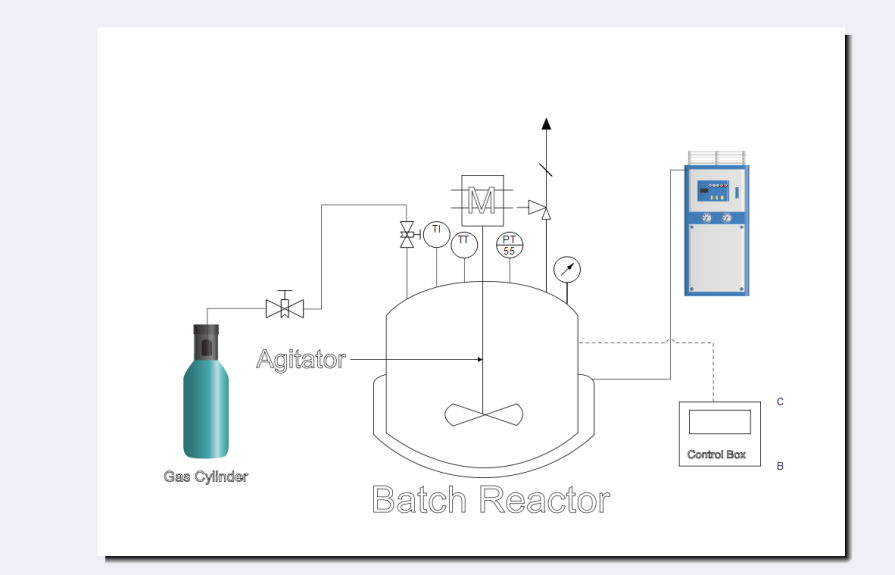
Propylene oxide (PO) is a crucial intermediate in the chemical industry, serving as a precursor for polyether polyols, propylene glycol, and various polymers. Traditional industrial PO production methods, such as the chlorohydrin and hydroperoxide routes, are hampered by significant environmental concerns and the generation of undesirable by-products. This study explores the direct transformation of propylene to PO using titanium silicate (TS-1) catalyst. The catalyst (TS-1) was synthesized and characterized by BET surface analysis, X-ray diffraction (XRD), scanning and transmission electron microscopy (SEM/TEM), and X-ray photoelectron spectroscopy (XPS). These analyses confirmed the formation of a crystalline MFI-type framework with well-dispersed titanium sites and a uniform, spherical morphology. Catalytic performance was evaluated in a batch reactor under varying conditions of temperature, pressure, hydrogen peroxide, and methanol concentrations. Under varying conditions, a maximum PO selectivity of 99.5% and a PO yield of up to 9% were achieved. The highest selectivity was obtained at lower H2O2 concentration, while the maximum yield required a higher H2O2 loading. The study also demonstrated the catalyst’s reusability and stability over multiple cycles, with minimal loss in activity. Side reactions, primarily the formation of propylene glycol and its ethers, were minimized by controlling water and hydrogen peroxide concentrations. The results highlight the advantages of TS-1, including high selectivity, environmental compatibility, and operational stability, making it a promising candidate for sustainable PO synthesis. This work provides valuable insights into the design of advanced heterogeneous catalysts for green chemical processes and addresses key challenges in the direct transformation of propylene oxide from propylene and hydrogen peroxide.
Graphical Abstract
Keywords
Data Availability Statement
Funding
Conflicts of Interest
Ethical Approval and Consent to Participate
References
- Tullo, A. H., & Short, P. L. (2006). Propylene oxide routes take off. Chemical & engineering news, 84(41), 22-23.
[CrossRef] [Google Scholar] - Adiko, R. G. (2019). Pengaruh Current Ratio Dan Total Asset Turnover Terhadap Roa Pada Perusahaan Sektor Farmasi Yang Terdaftar Di Bei Priode 2009-2013. Journal of Chemical Information and Modeling, 53(9), 1689–1699.
[CrossRef] [Google Scholar] - Wexler, P., & Anderson, B. D. (Eds.). (2005). Encyclopedia of toxicology (Vol. 1). Academic Press.
[Google Scholar] - Anbarasu, M., Anandan, M., Chinnasamy, E., Gopinath, V., & Balamurugan, K. (2015). Synthesis and characterization of polyethylene glycol (PEG) coated Fe3O4 nanoparticles by chemical co-precipitation method for biomedical applications. Spectrochimica Acta Part A: Molecular and Biomolecular Spectroscopy, 135, 536-539.
[CrossRef] [Google Scholar] - Romano, U., & Ricci, M. (2013). Industrial applications. Liquid phase oxidation via heterogeneous catalysis: organic synthesis and industrial applications, 451-506.
[CrossRef] [Google Scholar] - Russo, V., Tesser, R., Santacesaria, E., & Di Serio, M. (2013). Chemical and technical aspects of propene oxide production via hydrogen peroxide (HPPO process). Industrial & Engineering Chemistry Research, 52(3), 1168-1178.
[CrossRef] [Google Scholar] - Chowdhury, B., Bravo-Suárez, J. J., Date, M., Tsubota, S., & Haruta, M. (2006). Trimethylamine as a gas-phase promoter: Highly efficient epoxidation of propylene over supported gold catalysts. Angewandte Chemie International Edition, 45(3), 412–415.
[CrossRef] [Google Scholar] - Ghosh, S., Acharyya, S. S., Tiwari, R., Sarkar, B., Singha, R. K., Pendem, C., ... & Bal, R. (2014). Selective oxidation of propylene to propylene oxide over silver-supported tungsten oxide nanostructure with molecular oxygen. ACS catalysis, 4(7), 2169-2174.
[CrossRef] [Google Scholar] - Serrano, D. P., van Grieken, R., Melero, J. A., & Garcia, A. (2004). Liquid phase rearrangement of long straight-chain epoxides over amorphous, mesostructured and zeolitic catalysts. Applied Catalysis A: General, 269(1-2), 137-146.
[CrossRef] [Google Scholar] - Virmani, A., Walavalkar, M. P., Sharma, A., Sengupta, S., Saha, A., & Kumar, A. (2020). Kinetic studies of the gas phase reaction of 1, 2-propylene oxide with the OH radical over a temperature range of 261–335 K. Atmospheric Environment, 237, 117709.
[CrossRef] [Google Scholar] - Sugiyama, S., Sakuwa, Y., Ogino, T., Sakamoto, N., Shimoda, N., Katoh, M., & Kimura, N. (2019). Gas-phase epoxidation of propylene to propylene oxide on a supported catalyst modified with various dopants. Catalysts, 9(8), 638.
[CrossRef] [Google Scholar] - Schmal, M. (2016). Heterogeneous catalysis and its industrial applications. Rio de Janeiro: Springer.
[CrossRef] [Google Scholar] - Pinna, F. (1998). Supported metal catalysts preparation. Catalysis Today, 41(1-3), 129-137.
[CrossRef] [Google Scholar] - Lu, M., Tang, Y., Chen, W., Ye, G., Qian, G., Duan, X., ... & Zhou, X. (2019). Explosion limits estimation and process optimization of direct propylene epoxidation with H2 and O2. Chinese Journal of Chemical Engineering, 27(12), 2968-2978.
[CrossRef] [Google Scholar] - Li, Z., Zhang, J., Wang, D., Ma, W., & Zhong, Q. (2017). Confirmation of gold active sites on titanium-silicalite-1-supported nano-gold catalysts for gas-phase epoxidation of propylene. The Journal of Physical Chemistry C, 121(45), 25215-25222.
[CrossRef] [Google Scholar] - Boronat, M., Pulido, A., Concepción, P., & Corma, A. (2014). Propene epoxidation with O 2 or H 2–O 2 mixtures over silver catalysts: theoretical insights into the role of the particle size. Physical Chemistry Chemical Physics, 16(48), 26600-26612.
[CrossRef] [Google Scholar] - Miyazaki, T., Ozturk, S., Onal, I., & Senkan, S. (2003). Selective oxidation of propylene to propylene oxide using combinatorial methodologies. Catalysis Today, 81(3), 473–484.
[CrossRef] [Google Scholar] - Li, G., Wang, X., Yan, H., Chen, Y., & Su, Q. (2001). Effect of sodium ions on propylene epoxidation catalyzed by titanium silicalite. Applied Catalysis A: General, 218(1-2), 31-38.
[CrossRef] [Google Scholar] - Deng, X., Wang, Y., Shen, L., Wu, H., Liu, Y., & He, M. (2013). Low-cost synthesis of titanium silicalite-1 (TS-1) with highly catalytic oxidation performance through a controlled hydrolysis process. Industrial & Engineering Chemistry Research, 52(3), 1190-1196.
[CrossRef] [Google Scholar] - Xiong, G., Hu, D., Guo, Z., Meng, Q., & Liu, L. (2018). An efficient Titanium silicalite-1 catalyst for propylene epoxidation synthesized by a combination of aerosol-assisted hydrothermal synthesis and recrystallization. Microporous and Mesoporous Materials, 268, 93-99.
[CrossRef] [Google Scholar] - Hertzsch, T., Hulliger, J., Weber, E., & Sozzani, P. (2013). Organic zeolites. In Encyclopedia of Supramolecular Chemistry-Two-Volume Set (Print) (pp. vol2-996). CRC Press.
[Google Scholar] - Chen, Q., & Beckman, E. J. (2008). One-pot green synthesis of propylene oxide using in situ generated hydrogen peroxide in carbon dioxide. Green Chemistry, 10(9), 934-938.
[CrossRef] [Google Scholar] - Sachtler, W. M., & Zhang, Z. (1993). Zeolite-supported transition metal catalysts. In Advances in Catalysis (Vol. 39, pp. 129-220). Academic Press.
[CrossRef] [Google Scholar] - Sinha, A. K., Seelan, S., Tsubota, S., & Haruta, M. (2004). Catalysis by gold nanoparticles: epoxidation of propene. Topics in catalysis, 29(3), 95-102.
[CrossRef] [Google Scholar] - Mccoy, M. (2001). New routes to propylene oxide. Chemical & Engineering News, 79(43), 19-19.
[Google Scholar] - Vaughan, O. P., Kyriakou, G., Macleod, N., Tikhov, M., & Lambert, R. M. (2005). Copper as a selective catalyst for the epoxidation of propene. Journal of Catalysis, 236(2), 401-404.
[CrossRef] [Google Scholar] - Yap, N., Andres, R. P., & Delgass, W. N. (2004). Reactivity and stability of Au in and on TS-1 for epoxidation of propylene with H2 and O2. Journal of Catalysis, 226(1), 156-170.
[CrossRef] [Google Scholar] - Qi, C., Okumura, M., Akita, T., & Haruta, M. (2004). Vapor-phase epoxidation of propylene using H2/O2 mixture over gold catalysts supported on non-porous and mesoporous titania-silica: Effect of preparation conditions and pretreatments prior to reaction. Applied Catalysis A: General, 263(1), 19-26.
[CrossRef] [Google Scholar] - Haruta, M., & Daté, M. (2001). Advances in the catalysis of Au nanoparticles. Applied Catalysis A: General, 222(1-2), 427-437.
[CrossRef] [Google Scholar] - Clerici, M. G., Bellussi, G., & Romano, U. (1991). Synthesis of Propylene Oxide from Propylene and Hydrogen Peroxide Catalyzed by Titanium Silicalite. Journal of Catalysis, 129(1), 159–167.
[CrossRef] [Google Scholar] - Huang, M., Wen, Y., Wei, H., Zong, L., Gao, X., Wu, K., Wang, X., & Liu, M. (2021). The Clean Synthesis of Small-Particle TS-1 with High-Content Framework Ti by Using NH4HCO3 and Suspended Seeds as an Assistant. ACS Omega, 6(20), 13015–13023.
[CrossRef] [Google Scholar] - Khouchaf, L., Boulahya, K., Das, P. P., Nicolopoulos, S., Kis, V. K., & Lábár, J. L. (2020). Study of the microstructure of amorphous silica nanostructures using high-resolution electron microscopy, electron energy loss spectroscopy, X-ray powder diffraction, and electron pair distribution function. Materials, 13(19), 4393.
[CrossRef] [Google Scholar] - Owens, G. J., Singh, R. K., Foroutan, F., Alqaysi, M., Han, C.-M., Mahapatra, C., Kim, H.-W., & Knowles, J. C. (2016). Sol–gel based materials for biomedical applications. Progress in Materials Science, 77, 1–79.
[CrossRef] [Google Scholar] - Yang, J., Liu, S., Liu, Y., Zhou, L., Wen, H., Wei, H., Shen, R., Wu, X., Jiang, J., & Li, B. (2024). Review and Perspectives on TS-1 Catalyzed Propylene Epoxidation Science. Science, 27(3), 109064.
[CrossRef] [Google Scholar] - Inkson, B. J. (2016). Scanning electron microscopy (SEM) and transmission electron microscopy (TEM) for materials characterization. In Materials Characterization Using Nondestructive Evaluation (NDE) Methods (pp. 17–43).
[CrossRef] [Google Scholar] - Teamsinsungvon, A., Ruksakulpiwat, C., Amonpattaratkit, P., & Ruksakulpiwat, Y. (2022). Structural Characterization of Titanium–Silica Oxide Using Synchrotron Radiation X-Ray Absorption Spectroscopy. Polymers, 14(13), 2729.
[CrossRef] [Google Scholar] - Guan, Z. L., Wang, Y. D., Wang, Z., Hong, Y., Liu, S. L., Luo, H. W., ... & Su, B. L. (2024). The synthesis, characteristics, and application of hierarchical porous materials in carbon dioxide reduction reactions. Catalysts, 14(12), 936.
[CrossRef] [Google Scholar] - Tanev, P. T., & Pinnavaia, T. J. (1996). Biomimetic templating of porous lamellar silicas by vesicular surfactant assemblies. Science, 271(5253), 1267-1269.
[CrossRef] [Google Scholar] - Guo, Y., Zhou, L., Guo, F., Chen, X., Wu, J., & Zhang, Y. (2020). Pore Structure and Fractal Characteristic Analysis of Gasification-Coke Prepared at Different High-Temperature Residence Times. ACS Omega, 5(35), 22226–22237.
[CrossRef] [Google Scholar] - Bhaumik, A., Samanta, S., & Mal, N. K. (2004). Highly active disordered extra large pore titanium silicate. Microporous and Mesoporous Materials, 68(1–3), 29–35.
[CrossRef] [Google Scholar] - Wang, Q., Wang, L., Chen, J., Wu, Y., & Mi, Z. (2007). Deactivation and regeneration of titanium silicalite catalyst for epoxidation of propylene. Journal of Molecular Catalysis A: Chemical, 273(1-2), 73-80.
[CrossRef] [Google Scholar] - Chinh, V. D., Broggi, A., Di Palma, L., Scarsella, M., Speranza, G., Vilardi, G., & Thang, P. N. (2017). XPS Spectra Analysis of Ti2+, Ti3+ Ions and Dye Photodegradation Evaluation of Titania-Silica Mixed Oxide Nanoparticles. Journal of Electronic Materials, 47(4), 2215–2224.
[CrossRef] [Google Scholar] - Brassard, D., & Khakani, M. A. E. (2007). Substrate biasing effect on the electrical properties of magnetron-sputtered high-k titanium silicate thin films. Journal of Applied Physics, 102(3), 034106.
[CrossRef] [Google Scholar]
Cite This Article
TY  - JOUR
AU  - Pandey, Ankit
AU  - Nandi, Monojit
AU  - Dwivedi, Gaurav
AU  - Singh, Ajay
AU  - Maity, Samir Kumar
AU  - Poddar, Mukesh Kumar
PY  - 2025
DA  - 2025/12/08
TI  - Oxygen Insertion in Propylene to Make Propylene Oxide Over a Highly Stable and Efficient Titanium Silicate Catalyst
JO  - Journal of Chemical Engineering and Renewable Fuels
T2  - Journal of Chemical Engineering and Renewable Fuels
JF  - Journal of Chemical Engineering and Renewable Fuels
VL  - 2
IS  - 1
SP  - 13
EP  - 22
DO  - 10.62762/JCERF.2025.147821
UR  - https://www.icck.org/article/abs/JCERF.2025.147821
KW  - propylene
KW  - propylene oxide
KW  - TS-1
KW  - epoxidation
AB  - Propylene oxide (PO) is a crucial intermediate in the chemical industry, serving as a precursor for polyether polyols, propylene glycol, and various polymers. Traditional industrial PO production methods, such as the chlorohydrin and hydroperoxide routes, are hampered by significant environmental concerns and the generation of undesirable by-products. This study explores the direct transformation of propylene to PO using titanium silicate (TS-1) catalyst. The catalyst (TS-1) was synthesized and characterized by BET surface analysis, X-ray diffraction (XRD), scanning and transmission electron microscopy (SEM/TEM), and X-ray photoelectron spectroscopy (XPS). These analyses confirmed the formation of a crystalline MFI-type framework with well-dispersed titanium sites and a uniform, spherical morphology. Catalytic performance was evaluated in a batch reactor under varying conditions of temperature, pressure, hydrogen peroxide, and methanol concentrations. Under varying conditions, a maximum PO selectivity of 99.5% and a PO yield of up to 9% were achieved. The highest selectivity was obtained at lower H2O2 concentration, while the maximum yield required a higher H2O2 loading. The study also demonstrated the catalyst’s reusability and stability over multiple cycles, with minimal loss in activity. Side reactions, primarily the formation of propylene glycol and its ethers, were minimized by controlling water and hydrogen peroxide concentrations. The results highlight the advantages of TS-1, including high selectivity, environmental compatibility, and operational stability, making it a promising candidate for sustainable PO synthesis. This work provides valuable insights into the design of advanced heterogeneous catalysts for green chemical processes and addresses key challenges in the direct transformation of propylene oxide from propylene and hydrogen peroxide.
SN  - 3070-1058
PB  - Institute of Central Computation and Knowledge
LA  - English
ER  -
@article{Pandey2025Oxygen,
  author = {Ankit Pandey and Monojit Nandi and Gaurav Dwivedi and Ajay Singh and Samir Kumar Maity and Mukesh Kumar Poddar},
  title = {Oxygen Insertion in Propylene to Make Propylene Oxide Over a Highly Stable and Efficient Titanium Silicate Catalyst},
  journal = {Journal of Chemical Engineering and Renewable Fuels},
  year = {2025},
  volume = {2},
  number = {1},
  pages = {13-22},
  doi = {10.62762/JCERF.2025.147821},
  url = {https://www.icck.org/article/abs/JCERF.2025.147821},
  abstract = {Propylene oxide (PO) is a crucial intermediate in the chemical industry, serving as a precursor for polyether polyols, propylene glycol, and various polymers. Traditional industrial PO production methods, such as the chlorohydrin and hydroperoxide routes, are hampered by significant environmental concerns and the generation of undesirable by-products. This study explores the direct transformation of propylene to PO using titanium silicate (TS-1) catalyst. The catalyst (TS-1) was synthesized and characterized by BET surface analysis, X-ray diffraction (XRD), scanning and transmission electron microscopy (SEM/TEM), and X-ray photoelectron spectroscopy (XPS). These analyses confirmed the formation of a crystalline MFI-type framework with well-dispersed titanium sites and a uniform, spherical morphology. Catalytic performance was evaluated in a batch reactor under varying conditions of temperature, pressure, hydrogen peroxide, and methanol concentrations. Under varying conditions, a maximum PO selectivity of 99.5\% and a PO yield of up to 9\% were achieved. The highest selectivity was obtained at lower H2O2 concentration, while the maximum yield required a higher H2O2 loading. The study also demonstrated the catalyst’s reusability and stability over multiple cycles, with minimal loss in activity. Side reactions, primarily the formation of propylene glycol and its ethers, were minimized by controlling water and hydrogen peroxide concentrations. The results highlight the advantages of TS-1, including high selectivity, environmental compatibility, and operational stability, making it a promising candidate for sustainable PO synthesis. This work provides valuable insights into the design of advanced heterogeneous catalysts for green chemical processes and addresses key challenges in the direct transformation of propylene oxide from propylene and hydrogen peroxide.},
  keywords = {propylene, propylene oxide, TS-1, epoxidation},
  issn = {3070-1058},
  publisher = {Institute of Central Computation and Knowledge}
}
Article Metrics
Publisher's Note
ICCK stays neutral with regard to jurisdictional claims in published maps and institutional affiliations.
Rights and Permissions
 Copyright © 2025 by the Author(s). Published by Institute of Central Computation and Knowledge. This article is an open access article distributed under the terms and conditions of the Creative Commons Attribution (CC BY) license (https://creativecommons.org/licenses/by/4.0/), which permits use, sharing, adaptation, distribution and reproduction in any medium or format, as long as you give appropriate credit to the original author(s) and the source, provide a link to the Creative Commons licence, and indicate if changes were made.


Portico
