Transforming Industry 4.0 Security: Analysis of ABE and ABA Technologies





Article Information
Abstract
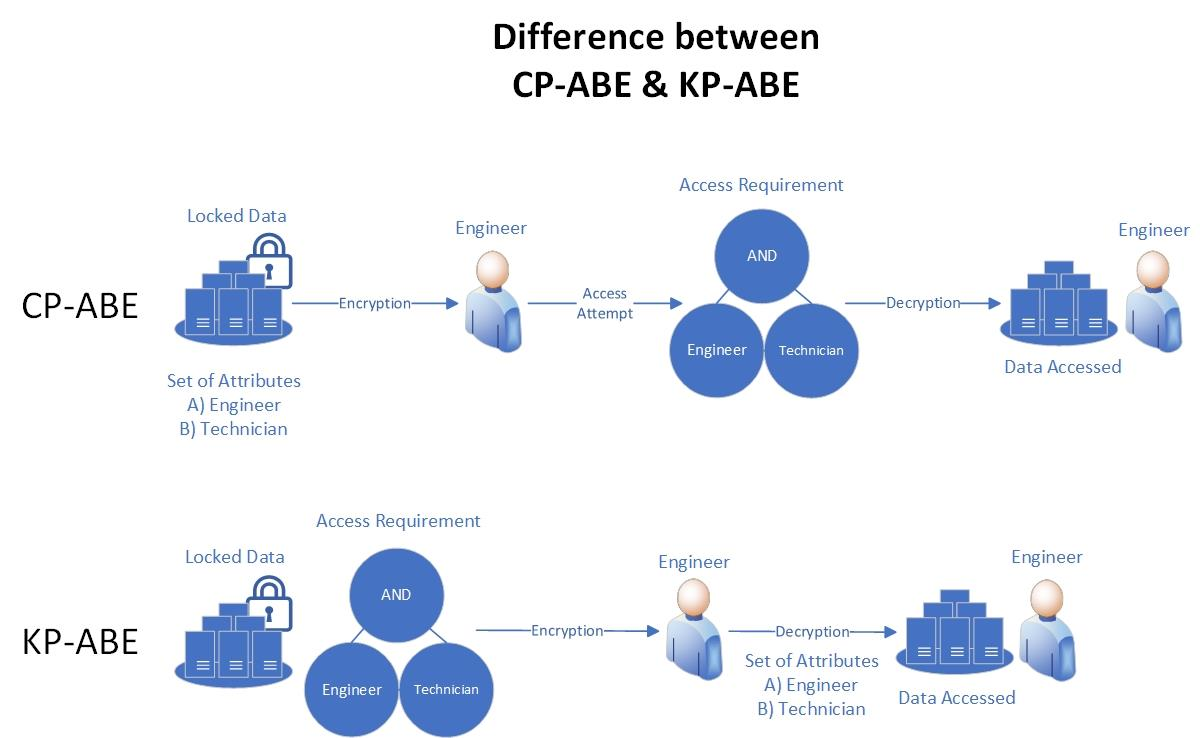
The increasing deployment of intelligent cyber-physical systems (CPS), autonomous devices, and IoT infrastructures in Industry 4.0 has introduced complex and dynamic security challenges that static, identity-based mechanisms are no longer sufficient to address. Intelligent industrial environments demand security frameworks capable of fine-grained, context-aware, and adaptive access control that can operate at scale across heterogeneous networked systems. In response to this need, Attribute-Based Encryption (ABE) and Attribute-Based Authentication (ABA) have emerged as essential building blocks for intelligent security architectures, enabling policy-driven data protection and authentication that are inherently aligned with the dynamic, attribute-rich nature of Industry 4.0 systems. This paper presents a structured review of ABE and ABA schemes, analysing key variants including KP-ABE, CP-ABE, and Decentralised ABE with respect to security, computational efficiency, and suitability for AI-augmented access control in Industry 4.0. Real-world deployments and future research directions, including AI-driven dynamic policy adaptation and energy-efficient schemes for intelligent edge devices, are also examined. The findings advance the understanding of ABE and ABA as core intelligent security control components, supporting the design of robust and autonomously adaptive security systems for next-generation industrial environments.
Graphical Abstract
Keywords
Data Availability Statement
Funding
Conflicts of Interest
Ethical Approval and Consent to Participate
References
- Li, J., Zhang, Y., Ning, J., Huang, X., Poh, G. S., & Wang, D. (2020). Attribute based encryption with privacy protection and accountability for CloudIoT. IEEE Transactions on Cloud Computing, 10(2), 762-773.
[CrossRef] [Google Scholar] - Zhang, Q., Cheng, L., & Boutaba, R. (2010). Cloud computing: state-of-the-art and research challenges. Journal of internet services and applications, 1(1), 7-18.
[CrossRef] [Google Scholar] - Chase, M., & Chow, S. S. (2009, November). Improving privacy and security in multi-authority attribute-based encryption. In Proceedings of the 16th ACM conference on Computer and communications security (pp. 121-130).
[CrossRef] [Google Scholar] - Han, J., Susilo, W., Mu, Y., & Yan, J. (2012). Privacy-preserving decentralized key-policy attribute-based encryption. IEEE transactions on parallel and distributed systems, 23(11), 2150-2162.
[CrossRef] [Google Scholar] - Sahai, A., & Waters, B. (2005). Fuzzy identity-based encryption. In Advances in Cryptology–EUROCRYPT 2005: 24th Annual International Conference on the Theory and Applications of Cryptographic Techniques, Aarhus, Denmark, May 22-26, 2005. Proceedings 24 (pp. 457-473). Springer Berlin Heidelberg.
[CrossRef] [Google Scholar] - Oberko, P. S. K., Obeng, V. H. K. S., Xiong, H., & Kumari, S. (2022). A survey on attribute-based signatures. Journal of Systems Architecture, 124, 102396.
[CrossRef] [Google Scholar] - Sebbah, A., & Kadri, B. (2020, June). A privacy and authentication scheme for IoT environments using ECC and fuzzy extractor. In 2020 International Conference on Intelligent Systems and Computer Vision (ISCV) (pp. 1-5). IEEE.
[CrossRef] [Google Scholar] - Punithavathi, P., Geetha, S., Karuppiah, M., Islam, S. H., Hassan, M. M., & Choo, K. K. R. (2019). A lightweight machine learning-based authentication framework for smart IoT devices. Information Sciences, 484, 255-268.
[CrossRef] [Google Scholar] - Li, J., Au, M. H., Susilo, W., Xie, D., & Ren, K. (2010, April). Attribute-based signature and its applications. In Proceedings of the 5th ACM symposium on information, computer and communications security (pp. 60-69).
[CrossRef] [Google Scholar] - Sucasas, V., Mantas, G., Papaioannou, M., & Rodriguez, J. (2021). Attribute-based pseudonymity for privacy-preserving authentication in cloud services. IEEE Transactions on Cloud Computing, 11(1), 168-184.
[CrossRef] [Google Scholar] - Guo, L., Zhang, C., Sun, J., & Fang, Y. (2012, June). Paas: A privacy-preserving attribute-based authentication system for ehealth networks. In 2012 IEEE 32nd International Conference on Distributed Computing Systems (pp. 224-233). IEEE.
[CrossRef] [Google Scholar] - Sandhu, R. S., Coyne, E. J., Feinstein, H. L., & Youman, C. E. (1996). Role-based access control models. Computer, 29(2), 38-47.
[CrossRef] [Google Scholar] - Guo, L., Zhang, C., Sun, J., & Fang, Y. (2013). A privacy-preserving attribute-based authentication system for mobile health networks. IEEE Transactions on Mobile Computing, 13(9), 1927-1941.
[CrossRef] [Google Scholar] - Maji, H. K., Prabhakaran, M., & Rosulek, M. (2011, February). Attribute-based signatures. In Cryptographers’ track at the RSA conference (pp. 376-392). Berlin, Heidelberg: Springer Berlin Heidelberg.
[CrossRef] [Google Scholar] - Dzurenda, P., Casanova-Marqués, R., Malina, L., & Hajny, J. (2022, August). Real-world Deployment of Privacy-Enhancing Authentication System using Attribute-based Credentials. In Proceedings of the 17th International Conference on Availability, Reliability and Security (pp. 1-9).
[CrossRef] [Google Scholar] - Schläger, C., Priebe, T., Liewald, M., & Pernul, G. (2007). Enabling attribute-based access control in authentication and authorisation infrastructures. Paper presented at the 20th Bled eConference, Bled, Slovenia. https://aisel.aisnet.org/bled2007/3/
[Google Scholar] - García-Rodríguez, J., & Skarmeta, A. (2023). A privacy-preserving attribute-based framework for IoT identity lifecycle management. Computer Networks, 236, 110039.
[CrossRef] [Google Scholar] - Liu, Z., Yan, H., & Li, Z. (2015). Server-aided anonymous attribute-based authentication in cloud computing. Future Generation Computer Systems, 52, 61-66.
[CrossRef] [Google Scholar] - Bhatt, S., Pham, T. K., Gupta, M., Benson, J., Park, J., & Sandhu, R. (2021). Attribute-based access control for AWS internet of things and secure industries of the future. IEEE Access, 9, 107200-107223.
[CrossRef] [Google Scholar] - Yu, Y., Zhao, Y., Li, Y., Du, X., Wang, L., & Guizani, M. (2019). Blockchain-based anonymous authentication with selective revocation for smart industrial applications. IEEE Transactions on Industrial Informatics, 16(5), 3290-3300.
[CrossRef] [Google Scholar] - Huang, Q., Ma, Z., Yang, Y., Niu, X., & Fu, J. (2014). Attribute based DRM scheme with dynamic usage control in cloud computing. China Communications, 11(4), 50-63.
[CrossRef] [Google Scholar] - Prasanna, V. L., & Kumar, C. K. R. (2015). A novel cipher text policy attribute based encryption algorithm for a secure data retrieval in military networks. Journal of Computing Technologies, 5(1), 111–117. https://jctjournals.com/January2016/v18.pdf
[Google Scholar] - Liagkou, V., Metakides, G., Pyrgelis, A., Raptopoulos, C., Spirakis, P., & Stamatiou, Y. C. (2012, October). Privacy preserving course evaluations in Greek higher education institutes: an e-Participation case study with the empowerment of Attribute Based Credentials. In Annual Privacy Forum (pp. 140-156). Berlin, Heidelberg: Springer Berlin Heidelberg.
[CrossRef] [Google Scholar] - Bakar, K. A. A., & Haron, G. R. (2013, June). Adaptive authentication: Issues and challenges. In 2013 World Congress on Computer and Information Technology (WCCIT) (pp. 1-6). IEEE.
[CrossRef] [Google Scholar] - Servos, D., & Osborn, S. L. (2017). Current research and open problems in attribute-based access control. ACM Computing Surveys (CSUR), 49(4), 1-45.
[CrossRef] [Google Scholar] - Rouselakis, Y., & Waters, B. (2013, November). Practical constructions and new proof methods for large universe attribute-based encryption. In Proceedings of the 2013 ACM SIGSAC conference on Computer & communications security (pp. 463-474).
[CrossRef] [Google Scholar] - Lai, J., Deng, R. H., & Li, Y. (2011). Fully secure cipertext-policy hiding CP-ABE. In Information Security Practice and Experience: 7th International Conference, ISPEC 2011, Guangzhou, China, May 30–June 1, 2011. Proceedings 7 (pp. 24-39). Springer Berlin Heidelberg.
[CrossRef] [Google Scholar] - Touati, L., & Challal, Y. (2016, May). Collaborative kp-abe for cloud-based internet of things applications. In 2016 IEEE International Conference on Communications (ICC) (pp. 1-7). IEEE.
[CrossRef] [Google Scholar] - Kim, J., Susilo, W., Guo, F., Au, M. H., & Nepal, S. (2017, April). An efficient KP-ABE with short ciphertexts in prime ordergroups under standard assumption. In Proceedings of the 2017 ACM on Asia Conference on Computer and Communications Security (pp. 823-834).
[CrossRef] [Google Scholar] - Chen, N., Li, J., Zhang, Y., & Guo, Y. (2020). Efficient CP-ABE scheme with shared decryption in cloud storage. IEEE Transactions on Computers, 71(1), 175-184.
[CrossRef] [Google Scholar] - Bethencourt, J., Sahai, A., & Waters, B. (2007, May). Ciphertext-policy attribute-based encryption. In 2007 IEEE symposium on security and privacy (SP'07) (pp. 321-334). IEEE.
[CrossRef] [Google Scholar] - Goyal, V., Pandey, O., Sahai, A., & Waters, B. (2006, October). Attribute-based encryption for fine-grained access control of encrypted data. In Proceedings of the 13th ACM conference on Computer and communications security (pp. 89-98).
[CrossRef] [Google Scholar] - He, X., Li, L., & Peng, H. (2023). A key escrow-free KP-ABE scheme and its application in standalone authentication in IoT. IEEE Internet of Things Journal, 11(7), 11381-11394.
[CrossRef] [Google Scholar] - Waters, B. (2011, March). Ciphertext-policy attribute-based encryption: An expressive, efficient, and provably secure realization. In International workshop on public key cryptography (pp. 53-70). Berlin, Heidelberg: Springer Berlin Heidelberg.
[CrossRef] [Google Scholar] - Oberko, P. S. K., Obeng, V. H. K. S., & Xiong, H. (2022). A survey on multi-authority and decentralized attribute-based encryption. Journal of Ambient Intelligence and Humanized Computing, 13(1), 515-533.
[CrossRef] [Google Scholar] - Lewko, A., & Waters, B. (2011, May). Decentralizing attribute-based encryption. In Annual international conference on the theory and applications of cryptographic techniques (pp. 568-588). Berlin, Heidelberg: Springer Berlin Heidelberg.
[CrossRef] [Google Scholar] - Binbusayyis, A., & Zhang, N. (2015, June). Decentralized attribute-based encryption scheme with scalable revocation for sharing data in public cloud servers. In 2015 International Conference on Cloud Technologies and Applications (CloudTech) (pp. 1-8). IEEE.
[CrossRef] [Google Scholar] - Oosterhout, J. (2023). Formal Verification of Lightweight Decentralized Attribute-based Encryption (Master's thesis, University of Twente). https://purl.utwente.nl/essays/97069
[Google Scholar] - Trnka, M., Abdelfattah, A. S., Shrestha, A., Coffey, M., & Cerny, T. (2022). Systematic review of authentication and authorization advancements for the Internet of Things. Sensors, 22(4), 1361.
[CrossRef] [Google Scholar] - Arshad, H., Johansen, C., & Owe, O. (2022). Semantic attribute-based access control: A review on current status and future perspectives. Journal of Systems Architecture, 129, 102625.
[CrossRef] [Google Scholar]
Cited By (7)
-
Mainak Mallick, Seung-Kyum Choi. .
2026 6th International Conference on Electrical, Computer and Energy Technologies (ICECET), 2026 .
[CrossRef] -
Peng You, Peng Chen, Xi Li, Ang Bian. Gated Memory-Guided Multi-scale spatio–temporal–spectral feature fusion network for unsupervised Internet of Things time series anomaly detection.
Engineering Applications of Artificial Intelligence, 2026 , 169 .
[CrossRef] -
Chung-Yen Wu, Kuo-Hsuan Huang, Chih-Yao Hsu. A Decentralised Multi-Authority Attribute-Based Encryption for Secure and Scalable IoT Access Control.
Applied Sciences, 2025 , 15 (7).
[CrossRef] -
Wesley Novaes Fioreze Costa, Arlindo F. Conceição, Vladimir Rocha. .
2025 16th IEEE International Conference on Industry Applications (INDUSCON), 2025 .
[CrossRef] -
Junzheng Jiang, Xinyi Liu, Fang Zhou. Distributed spectral conjugate gradient algorithm for node localization in wireless sensor networks.
Digital Signal Processing, 2025 , 162 .
[CrossRef] -
Mainak Mallick, Young-Dae Shim, Hong-In Won, Seung-Kyum Choi. Ensemble-Based Model-Agnostic Meta-Learning with Operational Grouping for Intelligent Sensory Systems.
Sensors, 2025 , 25 (6).
[CrossRef] -
Qiong Li, Rongsheng Cai, Yizhao Zhu. GHPPFL: A Privacy Preserving Federated Learning Based on Gradient Compression and Homomorphic Encryption in Consumer App Security.
IEEE Transactions on Consumer Electronics, 2025 , 71 (2).
[CrossRef]
Cite This Article
TY  - JOUR
AU  - Saleem, Jibran
AU  - Raza, Umar
AU  - Holderbaum, William
PY  - 2024
DA  - 2024/10/21
TI  - Transforming Industry 4.0 Security: Analysis of ABE and ABA Technologies
JO  - ICCK Transactions on Intelligent Systematics
T2  - ICCK Transactions on Intelligent Systematics
JF  - ICCK Transactions on Intelligent Systematics
VL  - 1
IS  - 3
SP  - 127
EP  - 144
DO  - 10.62762/TIS.2024.993235
UR  - https://www.icck.org/article/abs/TIS.2024.993235
KW  - intelligent cyber-physical systems
KW  - machine learning
KW  - industry 4.0
KW  - cybersecurity
KW  - cloud computing
KW  - ABA
KW  - ABE
AB  - The increasing deployment of intelligent cyber-physical systems (CPS), autonomous devices, and IoT infrastructures in Industry 4.0 has introduced complex and dynamic security challenges that static, identity-based mechanisms are no longer sufficient to address. Intelligent industrial environments demand security frameworks capable of fine-grained, context-aware, and adaptive access control that can operate at scale across heterogeneous networked systems. In response to this need, Attribute-Based Encryption (ABE) and Attribute-Based Authentication (ABA) have emerged as essential building blocks for intelligent security architectures, enabling policy-driven data protection and authentication that are inherently aligned with the dynamic, attribute-rich nature of Industry 4.0 systems. This paper presents a structured review of ABE and ABA schemes, analysing key variants including KP-ABE, CP-ABE, and Decentralised ABE with respect to security, computational efficiency, and suitability for AI-augmented access control in Industry 4.0. Real-world deployments and future research directions, including AI-driven dynamic policy adaptation and energy-efficient schemes for intelligent edge devices, are also examined. The findings advance the understanding of ABE and ABA as core intelligent security control components, supporting the design of robust and autonomously adaptive security systems for next-generation industrial environments.
SN  - 3068-5079
PB  - Institute of Central Computation and Knowledge
LA  - English
ER  -
@article{Saleem2024Transformi,
  author = {Jibran Saleem and Umar Raza and William Holderbaum},
  title = {Transforming Industry 4.0 Security: Analysis of ABE and ABA Technologies},
  journal = {ICCK Transactions on Intelligent Systematics},
  year = {2024},
  volume = {1},
  number = {3},
  pages = {127-144},
  doi = {10.62762/TIS.2024.993235},
  url = {https://www.icck.org/article/abs/TIS.2024.993235},
  abstract = {The increasing deployment of intelligent cyber-physical systems (CPS), autonomous devices, and IoT infrastructures in Industry 4.0 has introduced complex and dynamic security challenges that static, identity-based mechanisms are no longer sufficient to address. Intelligent industrial environments demand security frameworks capable of fine-grained, context-aware, and adaptive access control that can operate at scale across heterogeneous networked systems. In response to this need, Attribute-Based Encryption (ABE) and Attribute-Based Authentication (ABA) have emerged as essential building blocks for intelligent security architectures, enabling policy-driven data protection and authentication that are inherently aligned with the dynamic, attribute-rich nature of Industry 4.0 systems. This paper presents a structured review of ABE and ABA schemes, analysing key variants including KP-ABE, CP-ABE, and Decentralised ABE with respect to security, computational efficiency, and suitability for AI-augmented access control in Industry 4.0. Real-world deployments and future research directions, including AI-driven dynamic policy adaptation and energy-efficient schemes for intelligent edge devices, are also examined. The findings advance the understanding of ABE and ABA as core intelligent security control components, supporting the design of robust and autonomously adaptive security systems for next-generation industrial environments.},
  keywords = {intelligent cyber-physical systems, machine learning, industry 4.0, cybersecurity, cloud computing, ABA, ABE},
  issn = {3068-5079},
  publisher = {Institute of Central Computation and Knowledge}
}
Publisher's Note
ICCK stays neutral with regard to jurisdictional claims in published maps and institutional affiliations.
Rights and Permissions


Portico