Futuristic Metaverse: Security and Counter Measures





Article Information
Abstract
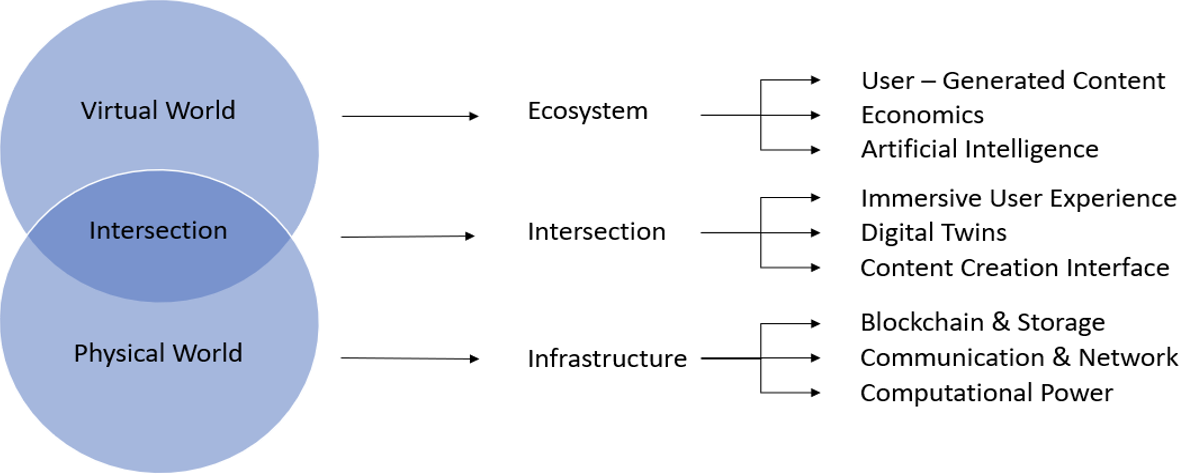
This paper presents a comprehensive analysis of the security and privacy challenges in the Metaverse, introducing a novel framework for evaluating and addressing these emerging threats. Our research makes three key contributions: (1) a systematic classification of Metaverse-specific security vulnerabilities across interconnected virtual and physical environments, (2) a framework for assessing privacy risks in AR/VR-enabled social interactions, and (3) targeted solutions for securing blockchain-based digital assets and identity management in the Metaverse. Our analysis highlights how traditional cybersecurity approaches must evolve to address the unique challenges posed by the fusion of physical and virtual worlds, immersive 3D environments, and cross-platform interactions. We examine the technological foundations of the Metaverse---including augmented reality (AR), virtual reality (VR), blockchain, and 5G networks---and assess their security implications. Our findings identify critical gaps in current security protocols and propose novel countermeasures for protecting user privacy, securing digital transactions, and maintaining data integrity across virtual environments. This research provides a roadmap for future security implementations in the Metaverse and identifies key areas requiring further investigation.
Graphical Abstract
Keywords
Data Availability Statement
Funding
Conflicts of Interest
Ethical Approval and Consent to Participate
References
- Sun, J., Gan, W., Chao, H. C., & Yu, P. S. (2022). Metaverse: Survey, applications, security, and opportunities. arXiv preprint arXiv:2210.07990.
[CrossRef] [Google Scholar] - Ali, M., Naeem, F., Kaddoum, G., & Hossain, E. (2023). Metaverse communications, networking, security, and applications: Research issues, state-of-the-art, and future directions. IEEE Communications Surveys & Tutorials.
[CrossRef] [Google Scholar] - Xu, M., Ng, W. C., Lim, W. Y. B., Kang, J., Xiong, Z., Niyato, D., ... & Miao, C. (2022). A full dive into realizing the edge-enabled metaverse: Visions, enabling technologies, and challenges. IEEE Communications Surveys & Tutorials, 25(1), 656-700.
[CrossRef] [Google Scholar] - Wang, F. Y., Qin, R., Wang, X., & Hu, B. (2022). Metasocieties in metaverse: Metaeconomics and metamanagement for metaenterprises and metacities. IEEE Transactions on Computational Social Systems, 9(1), 2-7.
[CrossRef] [Google Scholar] - Zhu, H. (2022). MetaAID: A Flexible Framework for Developing Metaverse Applications via AI Technology and Human Editing. arXiv preprint arXiv:2204.01614.
[Google Scholar] - Rehm, S. V., Goel, L., & Crespi, M. (2015). The metaverse as mediator between technology, trends, and the digital transformation of society and business. Journal For Virtual Worlds Research, 8(2).
[CrossRef] [Google Scholar] - Dionisio, J. D. N., Iii, W. G. B., & Gilbert, R. (2013). 3D virtual worlds and the metaverse: Current status and future possibilities. ACM computing surveys (CSUR), 45(3), 1-38.
[CrossRef] [Google Scholar] - Kang, G., Koo, J., & Kim, Y. G. (2023). Security and privacy requirements for the metaverse: A metaverse applications perspective. IEEE Communications Magazine, 62(1), 148-154.
[CrossRef] [Google Scholar] - Zhan, T., Yin, K., Xiong, J., He, Z., & Wu, S. T. (2020). Augmented reality and virtual reality displays: perspectives and challenges. Iscience, 23(8).
[CrossRef] [Google Scholar] - Di Pietro, R., & Cresci, S. (2021, December). Metaverse: Security and privacy issues. In 2021 third IEEE international conference on trust, privacy and security in intelligent systems and applications (TPS-ISA) (pp. 281-288). IEEE.
[CrossRef] [Google Scholar] - Wang, H., Ning, H., Lin, Y., Wang, W., Dhelim, S., Farha, F., ... & Daneshmand, M. (2023). A survey on the metaverse: The state-of-the-art, technologies, applications, and challenges. IEEE Internet of Things Journal, 10(16), 14671-14688.
[CrossRef] [Google Scholar] - Dwivedi, Y. K., Kshetri, N., Hughes, L., Rana, N. P., Baabdullah, A. M., Kar, A. K., ... & Yan, M. (2023). Exploring the darkverse: A multi-perspective analysis of the negative societal impacts of the metaverse. Information systems frontiers, 25(5), 2071-2114.
[CrossRef] [Google Scholar] - Ruiu, P., Nitti, M., Pilloni, V., Cadoni, M., Grosso, E., & Fadda, M. (2024). Metaverse & human digital twin: Digital identity, biometrics, and privacy in the future virtual worlds. Multimodal Technologies and Interaction, 8(6), 48.
[CrossRef] [Google Scholar] - Gupta, A., Gupta, R., Gohil, K., Tanwar, S., & Garg, D. (2024). Blockchain‐based decentralized oracle network framework for identity management in metaverse environment. Security and Privacy, 7(6), e414.
[CrossRef] [Google Scholar] - Berg, C., Davidson, S., & Potts, J. (2019). Blockchain technology as economic infrastructure: Revisiting the electronic markets hypothesis. Frontiers in Blockchain, 2, 493418.
[CrossRef] [Google Scholar] - Abou El Houda, Z., & Brik, B. (2023). Next-power: Next-generation framework for secure and sustainable energy trading in the metaverse. Ad Hoc Networks, 149, 103243.
[CrossRef] [Google Scholar] - Wang, Y., Su, Z., Zhang, N., Xing, R., Liu, D., Luan, T. H., & Shen, X. (2022). A survey on metaverse: Fundamentals, security, and privacy. IEEE Communications Surveys & Tutorials, 25(1), 319-352.
[CrossRef] [Google Scholar] - Delgado-Mohatar, O., Fierrez, J., Tolosana, R., & Vera-Rodriguez, R. (2020). Blockchain and biometrics: A first look into opportunities and challenges. In Blockchain and Applications: International Congress (pp. 169-177). Springer International Publishing.
[CrossRef] [Google Scholar] - Kumar, P., Kumar, R., Aloqaily, M., & Islam, A. N. (2023). Explainable AI and blockchain for metaverse: A security, and privacy perspective. IEEE Consumer Electronics Magazine.
[CrossRef] [Google Scholar] - Yang, Q., Zhao, Y., Huang, H., Xiong, Z., Kang, J., & Zheng, Z. (2022). Fusing blockchain and AI with metaverse: A survey. IEEE Open Journal of the Computer Society, 3, 122-136.
[CrossRef] [Google Scholar] - Chen, Z., Wu, J., Gan, W., & Qi, Z. (2022, December). Metaverse security and privacy: An overview. In 2022 IEEE International Conference on Big Data (Big Data) (pp. 2950-2959). IEEE.
[CrossRef] [Google Scholar] - Cheng, S. (2023). Metaverse Security. In Metaverse: Concept, Content and Context (pp. 145-163). Cham: Springer Nature Switzerland.
[CrossRef] [Google Scholar] - Wu, H., & Zhang, W. (2023). Digital identity, privacy security, and their legal safeguards in the Metaverse. Security and Safety, 2, 2023011.
[CrossRef] [Google Scholar] - Kuru, K., & Kuru, K. (2024, November). Urban metaverse cyberthreats and countermeasures against these threats. In 2024 6th International Conference on Blockchain Computing and Applications (BCCA) (pp. 228-235). IEEE.
[CrossRef] [Google Scholar] - Truong, V. T., & Le, L. B. (2023). MetaCIDS: Privacy-preserving collaborative intrusion detection for metaverse based on blockchain and online federated learning. IEEE Open Journal of the Computer Society.
[CrossRef] [Google Scholar] - Chow, Y. W., Susilo, W., Li, Y., Li, N., & Nguyen, C. (2022). Visualization and cybersecurity in the metaverse: A survey. Journal of Imaging, 9(1), 11.
[CrossRef] [Google Scholar] - Kabanda, G., Chipfumbu, C. T., & Chingoriwo, T. (2022). A Cybersecurity Model for a Roblox-based Metaverse Architecture Framework. British Journal of Multidisciplinary and Advanced Studies, 3(2), 105-141.
[CrossRef] [Google Scholar] - Qayyum, A., Butt, M. A., Ali, H., Usman, M., Halabi, O., Al-Fuqaha, A., ... & Qadir, J. (2024). Secure and trustworthy artificial intelligence-extended reality (AI-XR) for metaverses. ACM Computing Surveys, 56(7), 1-38.
[CrossRef] [Google Scholar] - Adil, M., Song, H., Khan, M. K., Farouk, A., & Jin, Z. (2024). 5G/6G-enabled metaverse technologies: Taxonomy, applications, and open security challenges with future research directions. Journal of Network and Computer Applications, 103828.
[CrossRef] [Google Scholar] - Seo, J., Ko, H., & Park, S. (2024). Space authentication in the metaverse: A blockchain-based user-centric approach. IEEE Access, 12, 18703-18713.
[CrossRef] [Google Scholar] - Siyaev, A., & Jo, G. S. (2021). Towards aircraft maintenance metaverse using speech interactions with virtual objects in mixed reality. Sensors, 21(6), 2066.
[CrossRef] [Google Scholar] - Yang, K., Zhang, Z., Youliang, T., & Ma, J. (2023). A secure authentication framework to guarantee the traceability of avatars in metaverse. IEEE Transactions on Information Forensics and Security, 18, 3817-3832.
[CrossRef] [Google Scholar] - Huang, Y., Li, Y. J., & Cai, Z. (2023). Security and privacy in metaverse: A comprehensive survey. Big Data Mining and Analytics, 6(2), 234-247.
[CrossRef] [Google Scholar] - Park, S. M., & Kim, Y. G. (2022). A metaverse: Taxonomy, components, applications, and open challenges. IEEE access, 10, 4209-4251.
[CrossRef] [Google Scholar] - Meta. (2022, June 28). June 2022 | Meta. Retrieved from https://about.fb.com/news/2022/06/
[Google Scholar] - Roblox Terms of Use. (2024). roblox.com. Retrieved from https://en.help.roblox.com/hc/en-us/articles/115004647846-Roblox-Terms-of-Use
[Google Scholar] - Xu, Y., Feng, D., Zhao, M., Sun, Y., & Xia, X. G. (2023). Edge intelligence empowered metaverse: architecture, technologies, and open issues. IEEE Network, 37(6), 92-100.
[CrossRef] [Google Scholar] - Otoum, Y., Gottimukkala, N., Kumar, N., & Nayak, A. (2024). Machine learning in metaverse security: Current solutions and future challenges. ACM Computing Surveys, 56(8), 1-36.
[CrossRef] [Google Scholar] - Wu, J., Lin, K., Lin, D., Zheng, Z., Huang, H., & Zheng, Z. (2023). Financial crimes in web3-empowered metaverse: Taxonomy, countermeasures, and opportunities. IEEE Open Journal of the Computer Society, 4, 37-49.
[CrossRef] [Google Scholar] - Sami, H., Hammoud, A., Arafeh, M., Wazzeh, M., Arisdakessian, S., Chahoud, M., ... & Guizani, M. (2024). The metaverse: Survey, trends, novel pipeline ecosystem & future directions. IEEE Communications Surveys & Tutorials.
[CrossRef] [Google Scholar] - Bhardwaj, A., & Kaushik, K. (2023). Metaverse or Metaworst with Cybersecurity Attacks. IT Professional, 25(3), 54-60.
[CrossRef] [Google Scholar] - Jaber, T. A. (2022). Security Risks of the Metaverse World. Int. J. Interact. Mob. Technol., 16(13), 4-14.
[CrossRef] [Google Scholar] - Pooyandeh, M., Han, K. J., & Sohn, I. (2022). Cybersecurity in the AI-Based metaverse: A survey. Applied Sciences, 12(24), 12993.
[CrossRef] [Google Scholar] - Zhao, R., Zhang, Y., Zhu, Y., Lan, R., & Hua, Z. (2023). Metaverse: Security and privacy concerns. Journal of metaverse, 3(2), 93-99.
[CrossRef] [Google Scholar] - Kürtünlüoğlu, P., Akdik, B., & Karaarslan, E. (2022). Security of virtual reality authentication methods in metaverse: An overview. arXiv preprint arXiv:2209.06447.
[CrossRef] [Google Scholar] - Tariq, S., Abuadbba, A., & Moore, K. (2023, July). Deepfake in the metaverse: Security implications for virtual gaming, meetings, and offices. In Proceedings of the 2nd Workshop on Security Implications of Deepfakes and Cheapfakes (pp. 16-19).
[CrossRef] [Google Scholar] - Metz, D., & Gurău, M. M. (2017). Emerging and Disruptive Technologies: The Metaverse. Implications on Global Security. Land Forces Academy Review, 27(4), 411-422.
[CrossRef] [Google Scholar] - Kim, M., Oh, J., Son, S., Park, Y., Kim, J., & Park, Y. (2023). Secure and privacy-preserving authentication scheme using decentralized identifier in metaverse environment. Electronics, 12(19), 4073.
[CrossRef] [Google Scholar] - Bale, A. S., Ghorpade, N., Hashim, M. F., Vaishnav, J., & Almaspoor, Z. (2022). A comprehensive study on metaverse and its impacts on humans. Advances in Human‐Computer Interaction, 2022(1), 3247060.
[CrossRef] [Google Scholar] - Patwe, S., & Mane, S. (2023, April). Blockchain enabled architecture for secure authentication in the metaverse environment. In 2023 IEEE 8th International Conference for Convergence in Technology (I2CT) (pp. 1-8). IEEE.
[CrossRef] [Google Scholar] - Ooi, B. C., Chen, G., Shou, M. Z., Tan, K. L., Tung, A., Xiao, X., ... & Zhang, M. (2023, April). The metaverse data deluge: What can we do about it?. In 2023 IEEE 39th International Conference on Data Engineering (ICDE) (pp. 3675-3687). IEEE.
[CrossRef] [Google Scholar] - Tang, F., Chen, X., Zhao, M., & Kato, N. (2022). The Roadmap of Communication and Networking in 6G for the Metaverse. IEEE Wireless Communications, 30(4), 72-81.
[CrossRef] [Google Scholar] - Chang, L., Zhang, Z., Li, P., Xi, S., Guo, W., Shen, Y., ... & Wu, Y. (2022). 6G-enabled edge AI for metaverse: Challenges, methods, and future research directions. Journal of communications and information networks, 7(2), 107-121.
[CrossRef] [Google Scholar] - Xu, H., Li, Z., Li, Z., Zhang, X., Sun, Y., & Zhang, L. (2022, May). Metaverse native communication: A blockchain and spectrum prospective. In 2022 IEEE International Conference on Communications Workshops (ICC Workshops) (pp. 7-12). IEEE.
[CrossRef] [Google Scholar] - Hu, M., Luo, X., Chen, J., Lee, Y. C., Zhou, Y., & Wu, D. (2021). Virtual reality: A survey of enabling technologies and its applications in IoT. Journal of Network and Computer Applications, 178, 102970.
[CrossRef] [Google Scholar] - Lee, L. H., Braud, T., Zhou, P. Y., Wang, L., Xu, D., Lin, Z., ... & Hui, P. (2024). All one needs to know about metaverse: A complete survey on technological singularity, virtual ecosystem, and research agenda. Foundations and trends® in human-computer interaction, 18(2–3), 100-337. http://dx.doi.org/10.1561/1100000095
[Google Scholar] - Upadhyay, A. K., & Khandelwal, K. (2022). Metaverse: the future of immersive training. Strategic HR Review, 21(3), 83-86.
[CrossRef] [Google Scholar] - Fu, Y., Li, C., Yu, F. R., Luan, T. H., Zhao, P., & Liu, S. (2022). A survey of blockchain and intelligent networking for the metaverse. IEEE Internet of Things Journal, 10(4), 3587-3610.
[CrossRef] [Google Scholar] - Kuzlu, M., Catak, F. O., Zhao, Y., Sarp, S., & Catak, E. (2023). Security and privacy concerns in next-generation networks using artificial intelligence-based solutions: A potential use case. In Wireless Networks: Cyber Security Threats and Countermeasures (pp. 205-226). Cham: Springer International Publishing.
[CrossRef] [Google Scholar] - Gadekallu, T. R., Huynh-The, T., Wang, W., Yenduri, G., Ranaweera, P., Pham, Q. V., ... & Liyanage, M. (2022). Blockchain for the metaverse: A review. arXiv preprint arXiv:2203.09738.
[CrossRef] [Google Scholar] - Park, W. H., Siddiqui, I. F., & Qureshi, N. M. F. (2022). AI-Enabled Grouping Bridgehead to Secure Penetration Topics of Metaverse. Computers, Materials & Continua, 73(3).
[Google Scholar] - Huynh-The, T., Pham, Q. V., Pham, X. Q., Nguyen, T. T., Han, Z., & Kim, D. S. (2023). Artificial intelligence for the metaverse: A survey. Engineering Applications of Artificial Intelligence, 117, 105581.
[CrossRef] [Google Scholar] - Mahmood, T., Fulmer, W., Mungoli, N., Huang, J., & Lu, A. (2019, October). Improving information sharing and collaborative analysis for remote geospatial visualization using mixed reality. In 2019 IEEE International Symposium on Mixed and Augmented Reality (ISMAR) (pp. 236-247). IEEE.
[CrossRef] [Google Scholar] - Liu, S., Zou, H., Zhao, X., Wang, C., & Fan, Y. (2023). Preface: Security and Safety in the “Metaverse”. Security and Safety, 2, E2023014.
[CrossRef] [Google Scholar] - Pierce, J. S., Stearns, B. C., & Pausch, R. (1999, April). Voodoo dolls: seamless interaction at multiple scales in virtual environments. In Proceedings of the 1999 symposium on Interactive 3D graphics (pp. 141-145).
[CrossRef] [Google Scholar] - Qamar, S., Anwar, Z., & Afzal, M. (2023). A systematic threat analysis and defense strategies for the metaverse and extended reality systems. Computers & Security, 128, 103127.
[CrossRef] [Google Scholar] - Salahdine, F., Han, T., & Zhang, N. (2023). Security in 5G and beyond recent advances and future challenges. Security and Privacy, 6(1), e271.
[CrossRef] [Google Scholar] - Swan, J. E., Singh, G., & Ellis, S. R. (2015). Matching and reaching depth judgments with real and augmented reality targets. IEEE transactions on visualization and computer graphics, 21(11), 1289-1298.
[CrossRef] [Google Scholar] - Swan, J. E., Livingston, M. A., Smallman, H. S., Brown, D., Baillot, Y., Gabbard, J. L., & Hix, D. (2006, March). A perceptual matching technique for depth judgments in optical, see-through augmented reality. In IEEE Virtual Reality Conference (VR 2006) (pp. 19-26). IEEE.
[CrossRef] [Google Scholar] - Zhang, X., Min, G., Li, T., Ma, Z., Cao, X., & Wang, S. (2023). AI and blockchain empowered metaverse for web 3.0: Vision, architecture, and future directions. IEEE communications magazine, 61(8), 60-66.
[CrossRef] [Google Scholar] - Wu, X., Yang, Y., Bilal, M., Qi, L., & Xu, X. (2023). 6G-enabled anomaly detection for metaverse healthcare analytics in Internet of Things. IEEE Journal of Biomedical and Health Informatics.
[CrossRef] [Google Scholar] - Mebrahtom, D., Hadish, S., Sbhatu, A., Aloqaily, M., & Guizani, M. (2023, September). Trust but verify-blockchain-empowered decentralized authentication schema on the metaverse: A self-sovereign identity approach. In 2023 international conference on intelligent metaverse technologies & applications (imeta) (pp. 1-8). IEEE.
[CrossRef] [Google Scholar] - Moudoud, H., & Cherkaoui, S. (2023, June). Federated learning meets blockchain to secure the metaverse. In 2023 International Wireless Communications and Mobile Computing (IWCMC) (pp. 339-344). IEEE.
[CrossRef] [Google Scholar] - Chaudhari, A., Mali, Y. K., Kulkarni, A., Jain, D., Sharma, L., Mahajan, K., ... & Bhogle, A. (2024, April). Cyber security challenges in social meta-verse and mitigation techniques. In 2024 MIT Art, Design and Technology School of Computing International Conference (MITADTSoCiCon) (pp. 1-7). IEEE.
[CrossRef] [Google Scholar] - Kürtünlüoğlu, P., Akdik, B., Duygu, R., & Karaarslan, E. (2023, October). Towards more secure virtual reality authentication for the metaverse: a decentralized method proposal. In 2023 16th International Conference on Information Security and Cryptology (ISCTürkiye) (pp. 1-6). IEEE.
[CrossRef] [Google Scholar]
Cited By (7)
-
Nidhi Dutta, Gurpreet Singh, Gyana Ranjana Panigrahi, Latika Pinjarkar. .
2026 International Conference on Smart Futuristic Technology, 2026 .
[CrossRef] -
Muhammad Usman Tariq. .
Securing the Metaverse in the Era of Scientific Competition, 2026 .
[CrossRef] -
Mainak Mallick, Seung-Kyum Choi. .
2026 6th International Conference on Electrical, Computer and Energy Technologies (ICECET), 2026 .
[CrossRef] -
Oleksandra Sobchyshak, Santiago Berrezueta-Guzman, Stefan Wagner. Pushing the boundaries of immersion and storytelling: A technical review of Unreal Engine.
Displays, 2026 , 91 .
[CrossRef] -
Marina Bosi, Alberto Cannavò, Leonardo Chiariglione, Gérard Chollet, Iain James Marshall, Panos Kudumakis. .
2026 IEEE 5th International Conference on Intelligent Reality (ICIR), 2026 .
[CrossRef] -
Ziyu Cheng, Luyi He, Liang Liu, Yuhan Ai. .
Proceedings of the 4th International Conference on Artificial Intelligence and Intelligent Information Processing, 2025 .
[CrossRef] -
Mohammad Z. Aloudat, Mahmoud Barhamgi, Elias Yaacoub, Dani Aoun. Security in Metaverse Markets: Challenges and Solutions—A Comprehensive Review.
Expert Systems, 2025 , 42 (8).
[CrossRef]
Cite This Article
TY  - JOUR
AU  - Ramolia, Nidhi
AU  - Tank, Pranav Piyushbhai
AU  - Ravikumar, R. N.
AU  - Zeb, Babar
AU  - Kumar, Manish
AU  - Singh, Sushil Kumar
PY  - 2025
DA  - 2025/01/04
TI  - Futuristic Metaverse: Security and Counter Measures
JO  - ICCK Transactions on Intelligent Systematics
T2  - ICCK Transactions on Intelligent Systematics
JF  - ICCK Transactions on Intelligent Systematics
VL  - 2
IS  - 1
SP  - 49
EP  - 65
DO  - 10.62762/TIS.2024.194631
UR  - https://www.icck.org/article/abs/TIS.2024.194631
KW  - metaverse
KW  - security
KW  - virtual reality
KW  - metaverse security
KW  - applications
KW  - challenges
AB  - This paper presents a comprehensive analysis of the security and privacy challenges in the Metaverse, introducing a novel framework for evaluating and addressing these emerging threats. Our research makes three key contributions: (1) a systematic classification of Metaverse-specific security vulnerabilities across interconnected virtual and physical environments, (2) a framework for assessing privacy risks in AR/VR-enabled social interactions, and (3) targeted solutions for securing blockchain-based digital assets and identity management in the Metaverse. Our analysis highlights how traditional cybersecurity approaches must evolve to address the unique challenges posed by the fusion of physical and virtual worlds, immersive 3D environments, and cross-platform interactions. We examine the technological foundations of the Metaverse---including augmented reality (AR), virtual reality (VR), blockchain, and 5G networks---and assess their security implications. Our findings identify critical gaps in current security protocols and propose novel countermeasures for protecting user privacy, securing digital transactions, and maintaining data integrity across virtual environments. This research provides a roadmap for future security implementations in the Metaverse and identifies key areas requiring further investigation.
SN  - 3068-5079
PB  - Institute of Central Computation and Knowledge
LA  - English
ER  -
@article{Ramolia2025Futuristic,
  author = {Nidhi Ramolia and Pranav Piyushbhai Tank and R. N. Ravikumar and Babar Zeb and Manish Kumar and Sushil Kumar Singh},
  title = {Futuristic Metaverse: Security and Counter Measures},
  journal = {ICCK Transactions on Intelligent Systematics},
  year = {2025},
  volume = {2},
  number = {1},
  pages = {49-65},
  doi = {10.62762/TIS.2024.194631},
  url = {https://www.icck.org/article/abs/TIS.2024.194631},
  abstract = {This paper presents a comprehensive analysis of the security and privacy challenges in the Metaverse, introducing a novel framework for evaluating and addressing these emerging threats. Our research makes three key contributions: (1) a systematic classification of Metaverse-specific security vulnerabilities across interconnected virtual and physical environments, (2) a framework for assessing privacy risks in AR/VR-enabled social interactions, and (3) targeted solutions for securing blockchain-based digital assets and identity management in the Metaverse. Our analysis highlights how traditional cybersecurity approaches must evolve to address the unique challenges posed by the fusion of physical and virtual worlds, immersive 3D environments, and cross-platform interactions. We examine the technological foundations of the Metaverse---including augmented reality (AR), virtual reality (VR), blockchain, and 5G networks---and assess their security implications. Our findings identify critical gaps in current security protocols and propose novel countermeasures for protecting user privacy, securing digital transactions, and maintaining data integrity across virtual environments. This research provides a roadmap for future security implementations in the Metaverse and identifies key areas requiring further investigation.},
  keywords = {metaverse, security, virtual reality, metaverse security, applications, challenges},
  issn = {3068-5079},
  publisher = {Institute of Central Computation and Knowledge}
}
Publisher's Note
ICCK stays neutral with regard to jurisdictional claims in published maps and institutional affiliations.
Rights and Permissions


Portico