

Digital Intelligence in Agriculture

Publishing Model:
ISSN:
ISSN: 3069-3187
Digital Intelligence in Agriculture is a peer-reviewed journal dedicated to advancing the integration of digital technologies and intelligent systems in agricultural sciences.
DOI Prefix: 10.62762/DIA

Journal Metrics

-
Impact Factor
-
CiteScore

Recent Articles

Open Access | Research Article | 09 March 2026
Application of Different Rearing Modes on Growth Performance of Goslings in Cold Northern Regions Under the Background of Artificial Intelligence
Digital Intelligence in Agriculture | Volume 2, Issue 1: 1-11, 2026 | DOI: 10.62762/DIA.2025.864705
Abstract
Under the background of AI promoting precision livestock farming, this study compared the effects of fermentation bed and net bed systems on gosling rearing in cold northern regions using AI-based intelligent temperature monitoring. A total of 10,000 one-day-old "Dasanhua" goslings were divided into two groups (n=5,000/group) and reared for 28 days. An AI-driven wireless temperature sensing system enabled real-time, high-precision monitoring of environmental temperatures. Growth performance (ADG, ADFI, F/G, survival rate) and economic benefits were systematically evaluated. The AI system revealed significant temperature differences: the fermentation bed maintained a stable average temperatur... More >
Open Access | Research Article | 29 December 2025
Research on Adaptive Improvement and Promotion Path of Intelligent Agricultural Machinery in Hilly and Mountainous Areas
Digital Intelligence in Agriculture | Volume 1, Issue 2: 110-119, 2025 | DOI: 10.62762/DIA.2025.914623
Abstract
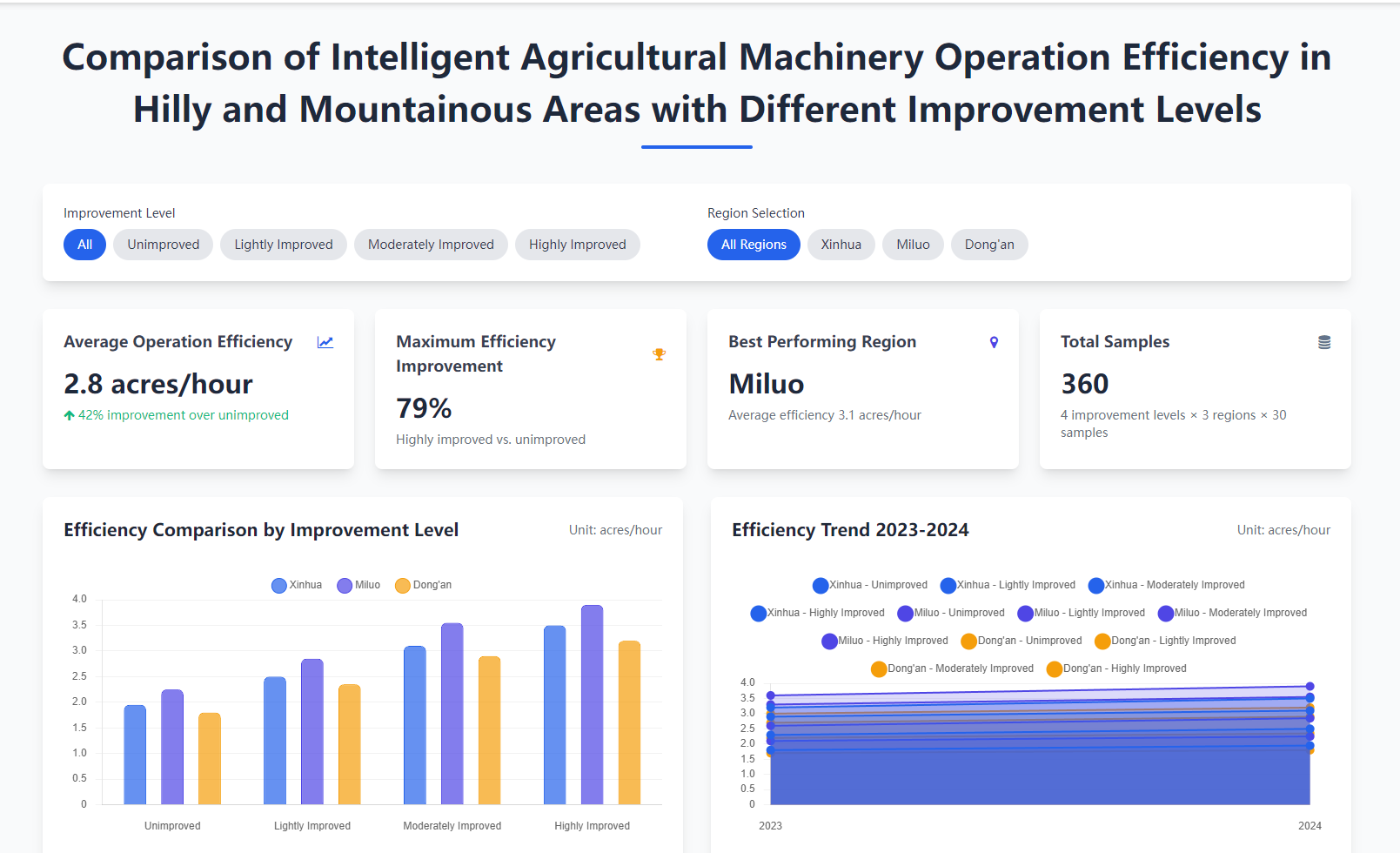
Hilly and mountainous areas account for 69% of China’s land area and undertake critical agricultural production tasks, but the poor adaptability of mainstream intelligent agricultural machinery and inefficient promotion models have become key bottlenecks restricting agricultural modernization. This study’s core innovation lies in constructing a ``four-dimensional integrated solution'' (equipment lightweight improvement - dynamic control optimization - hybrid sharing promotion - farmland mechanization-friendly transformation) and quantifying the coupling mechanism between topographic constraints and agricultural machinery performance. By introducing plot shape coefficient and slope volati... More >

Graphical Abstract
Research on Adaptive Improvement and Promotion Path of Intelligent Agricultural Machinery in Hilly and Mountainous Areas
Open Access | Research Article | 28 December 2025
Design and Testing of an Intelligent Cut-and-Harvest Machine for Apocynum Venetum
Digital Intelligence in Agriculture | Volume 1, Issue 2: 96-109, 2025 | DOI: 10.62762/DIA.2025.327734
Abstract
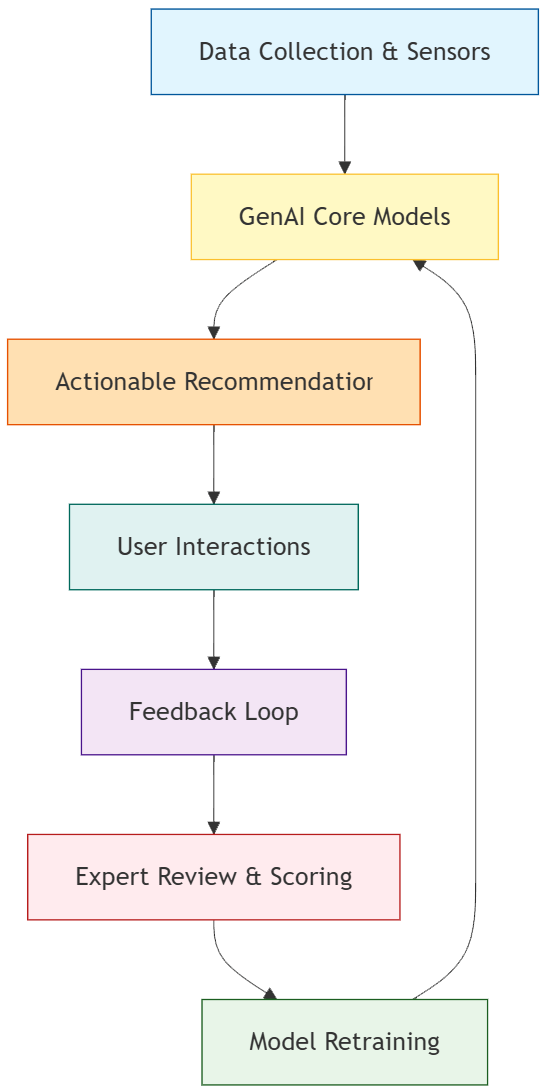
Apocynum venetum has clustered, highly branched stems with strong phloem fiber adhesion, which makes mechanical harvesting prone to entanglement, grip slippage, conveyance blockage, and uneven, high stubble. Existing cutting and bundling machines do not match this morphology well and cannot meet both low-stubble and anti-clogging requirements. To address these problems, an integrated Apocynum venetum cutting-bundling harvester was developed that combines a reciprocating cutting mechanism, stem-folding assembly, vertical anti-clogging conveyor at the cutting table, height-adjustable crop-plate compaction device, and cord-based bundling mechanism, which was supported by a combined navigation s... More >

Graphical Abstract
Design and Testing of an Intelligent Cut-and-Harvest Machine for Apocynum Venetum
Open Access | Research Article | 18 December 2025
Robust Detection of Maize Foliage Fungal Diseases using Tree-Based Ensemble Methods
Digital Intelligence in Agriculture | Volume 1, Issue 2: 79-95, 2025 | DOI: 10.62762/DIA.2025.672386
Abstract
Maize productivity in India, a major global producer, is severely threatened by leaf diseases. Accurate identification of Common Rust (CR), Northern Corn Leaf Blight (NCLB), and Gray Leaf Spot (GLS) remains challenging with traditional methods. This study evaluated traditional and ensemble-based classifiers for classifying these diseases alongside healthy (HL) leaves. Using accuracy, precision, recall, and F1-score, we assessed k-NN, DT, RF, ETs, AdaBoost, SGD, GB, XGBoost, LightGBM, and a Stacking model on a four-class dataset. Ensemble methods demonstrated clear superiority. The Stacking model achieved the highest accuracy (98.50%), followed by LightGBM (98.46%) and XGBoost (98.01%). Among... More >

Graphical Abstract
Robust Detection of Maize Foliage Fungal Diseases using Tree-Based Ensemble Methods
Open Access | Research Article | 08 December 2025
Digital-Intelligence Assessment of Production–Living–Ecological Spaces for Agricultural Modernization: A Case Study of Ulanqab City
Digital Intelligence in Agriculture | Volume 1, Issue 2: 61-78, 2025 | DOI: 10.62762/DIA.2025.135622
Abstract
Against the backdrop of the synergistic advancement of rural revitalization and agricultural modernization, optimizing the Production-Living-Ecological (PLE) spatial pattern and introducing digital-intelligent technologies have become key pathways for enhancing sustainable rural development capabilities. This study takes Ulanqab City in Inner Mongolia, a typical agro-pastoral ecotone, as a case study. Based on multi-source remote sensing image data from 2000 to 2020, it comprehensively utilizes a coupling coordination model and spatial information technology to evaluate the evolution characteristics of its PLE spaces and the coordination mechanisms of agricultural functions, supplemented by... More >

Graphical Abstract
Digital-Intelligence Assessment of Production–Living–Ecological Spaces for Agricultural Modernization: A Case Study of Ulanqab City
Open Access | Review Article | 06 November 2025 | Cited: Crossref logo  1 , Scopus 1
Global Research Trends on Ecosystem Service Valuation Using Remote Sensing (1990–2024)
Digital Intelligence in Agriculture | Volume 1, Issue 2: 47-60, 2025 | DOI: 10.62762/DIA.2025.654827
Abstract
Ecosystem service valuation (ESV) provides a scientific basis for balancing ecological conservation and socioeconomic development. With the rapid progress of Earth observation technologies, remote sensing has become an essential tool for quantifying and mapping ecosystem services at multiple spatial and temporal scales. However, a comprehensive understanding of the global research landscape on ecosystem service valuation using remote sensing remains limited. In this study, this study conducted a bibliometric analysis of publications retrieved from the Web of Science Core Collection between 1990 and 2024. A total of 1172 articles were identified through a systematic search strategy integratin... More >

Graphical Abstract
Global Research Trends on Ecosystem Service Valuation Using Remote Sensing (1990–2024)
Open Access | Research Article | 29 August 2025
Projecting the Potential Distribution of Pinus Taiwanensis Under Climate Change Using Ensemble Modeling in Biomod2
Digital Intelligence in Agriculture | Volume 1, Issue 1: 35-46, 2025 | DOI: 10.62762/DIA.2025.271459
Abstract
The continuous rise in global atmospheric carbon dioxide has profoundly altered climate patterns and the spatiotemporal balance of hydrothermal conditions at regional scales. Understanding species’ responses to climatic factors is thus critical for biodiversity conservation. This study focuses on Pinus taiwanensis, analyzing changes in its suitable habitat using distribution data and environmental variables. Employing the biomod2 ensemble model, potential habitats were predicted under three climate scenarios (SSPs126, SSPs370, SSPs585) for the present, 2050, and 2090. Results show: (1) Model performance is excellent (AUC > 0.9, TSS > 0.8). (2) Temperature-related factors (isothermality, di... More >

Graphical Abstract
Projecting the Potential Distribution of Pinus Taiwanensis Under Climate Change Using Ensemble Modeling in Biomod2
Open Access | Research Article | 28 August 2025 | Cited: Crossref logo  1 , Scopus 1
Preliminary Application of Unmanned Plant Protection Machinery for Control of Cauliflower Diseases and Insect Pests in a Greenhouse
Digital Intelligence in Agriculture | Volume 1, Issue 1: 24-34, 2025 | DOI: 10.62762/DIA.2025.202928
Abstract
Regular control of diseases and pests is crucial for maximizing cauliflower yield and quality. Spray application of chemical pesticides causes environmental pollution, pesticide residue accumulation, and is labor-intensive. To address these challenges, we developed an unmanned plant protection device integrating ozone sterilization, light traps, and Internet of Things (IoT) technologies. Installed in a greenhouse, the device included an ozone generator, high-speed fan, and insect traps. It was remotely controlled via a mobile app for real-time adjustments to ozone release, fan speed, trap lamp operation, environmental data collection, and system monitoring. Greenhouse experiments tested the... More >

Graphical Abstract
Preliminary Application of Unmanned Plant Protection Machinery for Control of Cauliflower Diseases and Insect Pests in a Greenhouse

Journal Statistics

69
Authors
5
Countries / Regions
19
Articles
Scopus: 7
Citations
2025
Published Since
18,108
Article Views
5,167
Article Downloads
Digital Intelligence in Agriculture
eISSN: 3069-3187
Crossref
Crossref
Member of Crossref
Visit Crossref →