





Chinese Journal of Information Fusion

Partner Journal of The Chinese Society of Aeronautics and Astronautics

Publishing Model:
ISSN:
Online ISSN: 2998-3371 | Print ISSN: 2998-3363
Indexing: Google Scholar, Dimensions, J-Gate, OpenAIRE, Lens, ResearchGate, OpenAlex, WorldCat, EuroPub
Chinese Journal of Information Fusion is a peer-reviewed academic journal reflecting the achievements of cutting-edge research and application of information fusion technology, mainly publishing academic papers in the field of information fusion.
DOI Prefix: 10.62762/CJIF

Journal Metrics

-
Impact Factor
-
CiteScore

Recent Articles

Open Access | Research Article | 20 November 2025 | Cited: Crossref logo  1 , Scopus 1
A Novel Electromagnetic Spectrum Prediction Model Based upon Multi-Dimensional Feature Fusion
Chinese Journal of Information Fusion | Volume 3, Issue 1: 1-16, 2026 | DOI: 10.62762/CJIF.2025.747641
Abstract
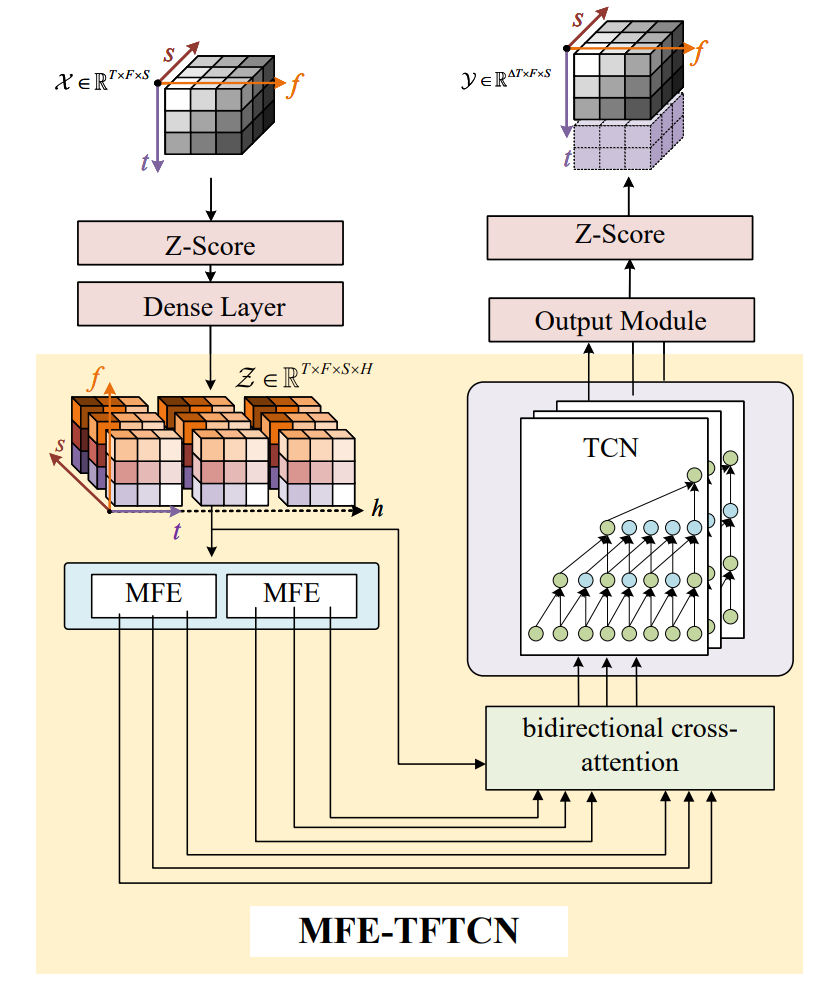
In the era of increasingly scarce spectrum resources, electromagnetic spectrum (EMS) prediction has emerged as a critical means for enhancing spectrum utilization efficiency. However, most of the existing EMS methods primarily exploit low-dimensional features such as temporal, frequency, or spatial characteristics in an individual fashion, which limits their ability to fully capture the inherent complexity of spectrum dynamics. To improve the performance, this paper proposes a novel EMS prediction model, which involving three operations, namely multi-dimensional decoupling, feature fusion and temporal prediction. Firstly, for multi-dimensional decoupling operation, we propose a Multi-dimensi... More >

Graphical Abstract

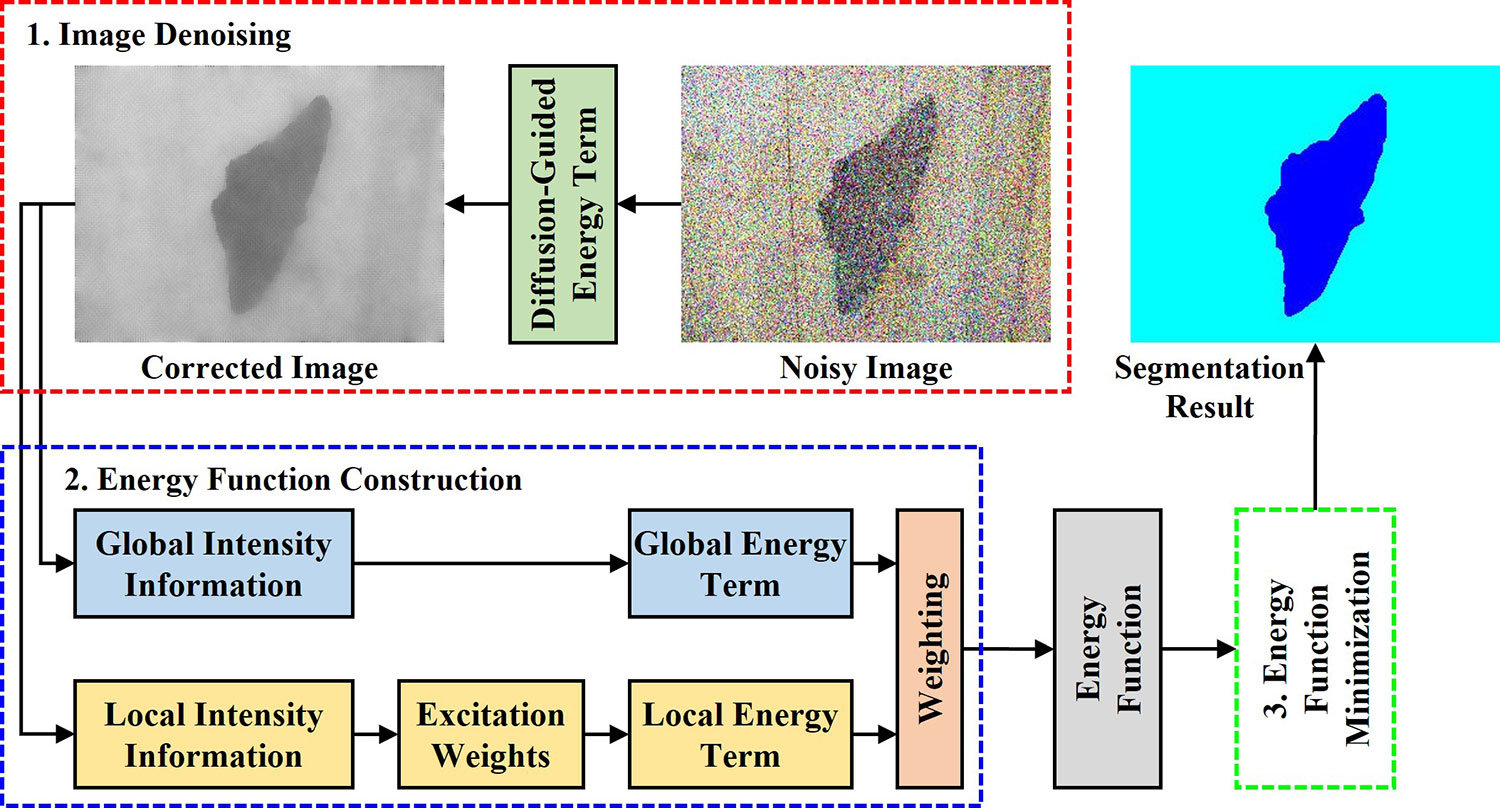
A Novel Electromagnetic Spectrum Prediction Model Based upon Multi-Dimensional Feature Fusion
Open Access | Research Article | 13 November 2025 | Cited: Crossref logo  2
VBCSNet: A Hybrid Attention-Based Multimodal Framework with Structured Self-Attention for Sentiment Classification
Chinese Journal of Information Fusion | Volume 2, Issue 4: 356-369, 2025 | DOI: 10.62762/CJIF.2025.537775
Abstract
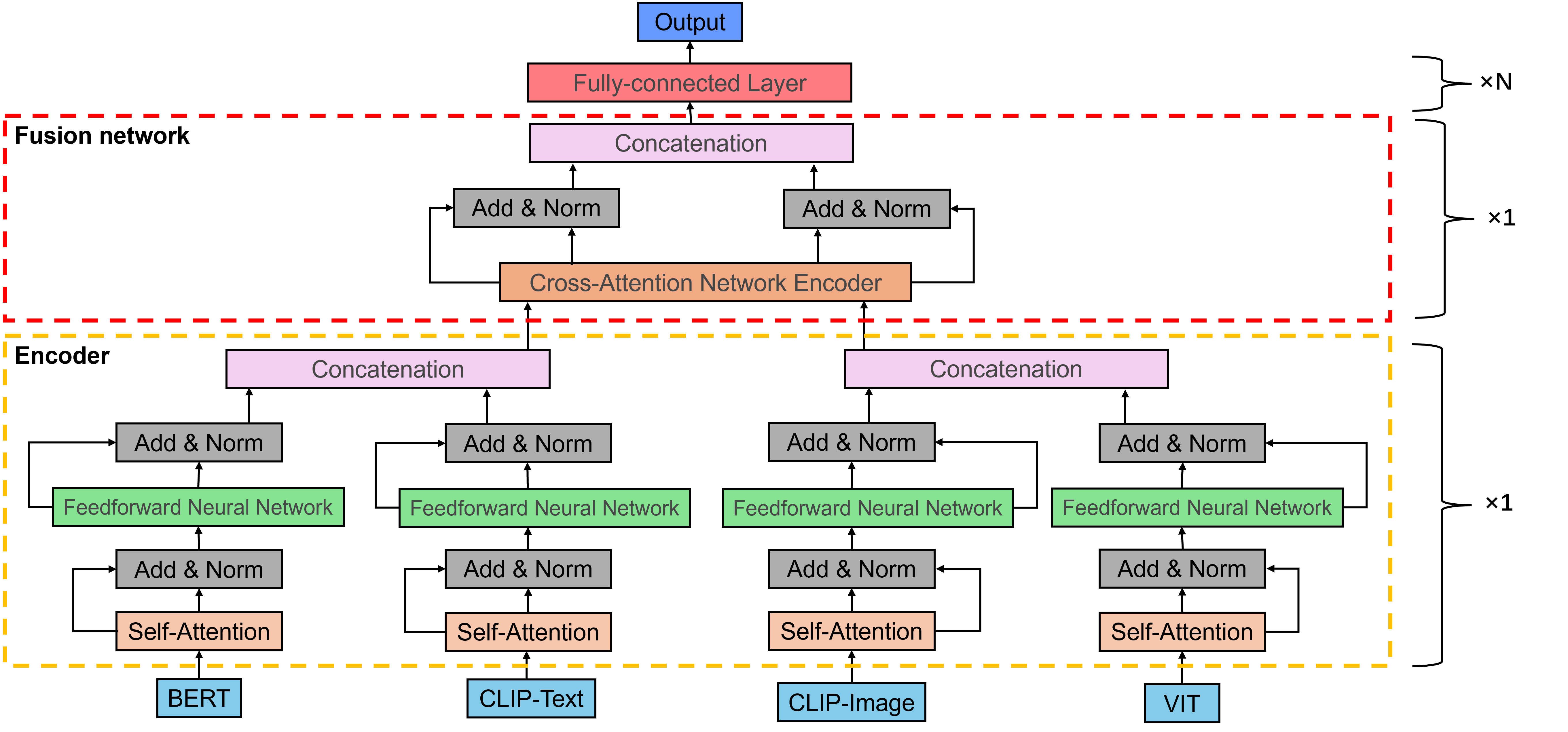
Multimodal Sentiment Analysis (MSA), a pivotal task in affective computing, aims to enhance sentiment understanding by integrating heterogeneous data from modalities such as text, images, and audio. However, existing methods continue to face challenges in semantic alignment, modality fusion, and interpretability. To address these limitations, we propose VBCSNet, a hybrid attention-based multimodal framework that leverages the complementary strengths of Vision Transformer (ViT), BERT, and CLIP architectures. VBCSNet employs a Structured Self-Attention (SSA) mechanism to optimize intra-modal feature representation and a Cross-Attention module to achieve fine-grained semantic alignment across m... More >

Graphical Abstract

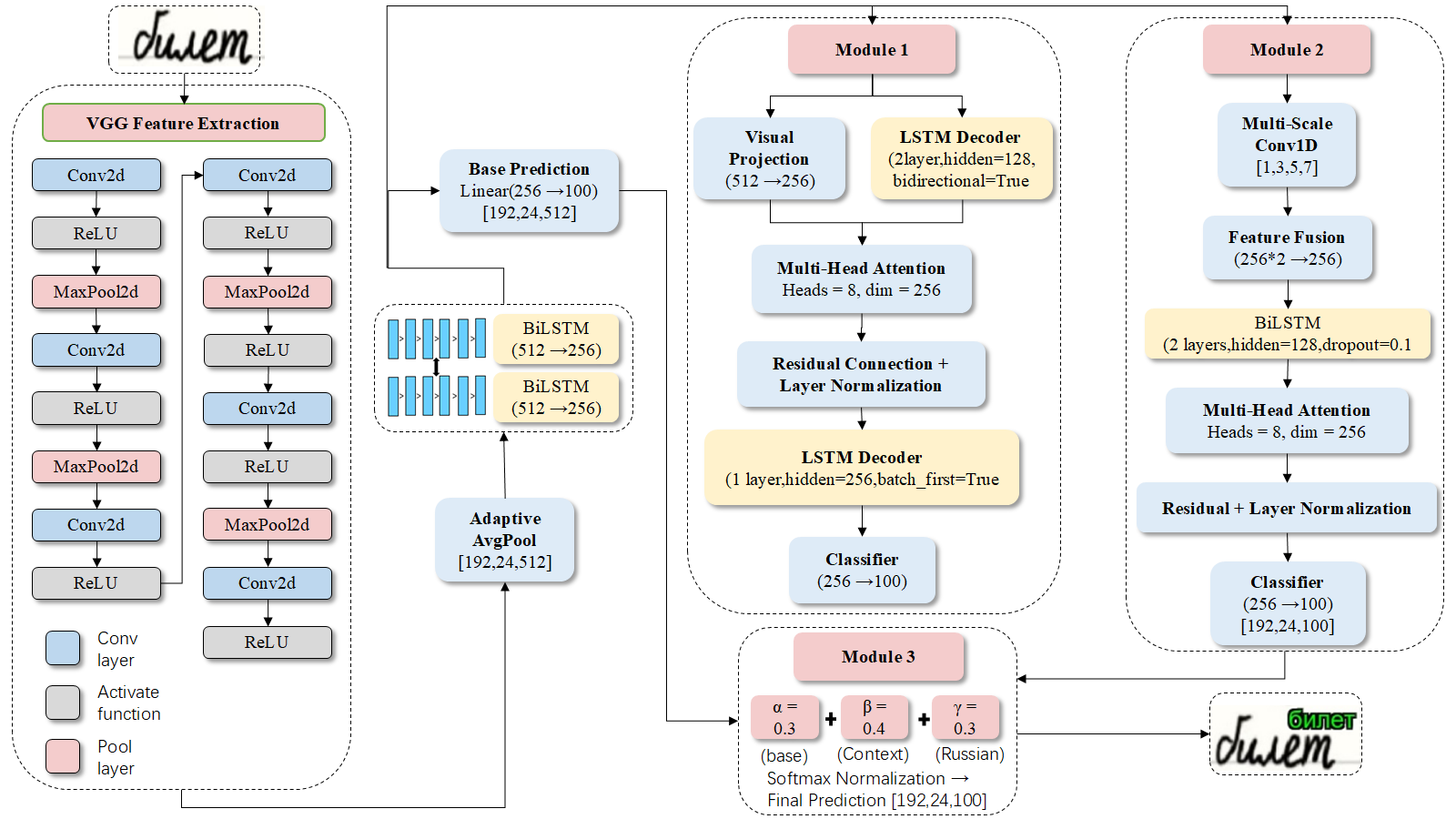
VBCSNet: A Hybrid Attention-Based Multimodal Framework with Structured Self-Attention for Sentiment Classification
Open Access | Review Article | 12 November 2025
A Biometric Authentication Framework Based on Image Watermarking
Chinese Journal of Information Fusion | Volume 2, Issue 4: 340-355, 2025 | DOI: 10.62762/CJIF.2025.545927
Abstract
The need for robust information protection techniques has become important in security applications, especially to safeguard secret messages during transmission. The rapid expansion and pervasive use of the Internet have amplified security concerns, particularly regarding the authenticity of digital images, a significant issue in the context of the fourth industrial revolution. Biometric authentication using image watermarking addresses these concerns by embedding biometric information into digital images, thereby ensuring their security and privacy. Numerous recent methods have fused biometric modalities with watermarking techniques to enhance the security and reliability of transmitted mes... More >

Graphical Abstract

A Biometric Authentication Framework Based on Image Watermarking
Open Access | Review Article | 10 November 2025
A Systematic Review on Real-time Detection of Small Obstacles Based on Multidimensional Information Fusion
Chinese Journal of Information Fusion | Volume 2, Issue 4: 313-339, 2025 | DOI: 10.62762/CJIF.2025.500710
Abstract
Real-time detection of small obstacles is a critical challenge for autonomous systems such as self-driving vehicles, unmanned aerial vehicles (UAVs), and mobile robots. These small obstacles (e.g., road debris, fallen branches, cables) pose significant safety risks due to their low visibility and irregular appearances. This paper presents a comprehensive systematic review of 117 technical articles published between 2016 and 2025, focusing on the techniques and deployment strategies for real-time small obstacle detection using fused multidimensional information. We summarize and analyze developments in small obstacle definitions, sensing hardware, detection algorithms, fusion methods, and rea... More >

Graphical Abstract

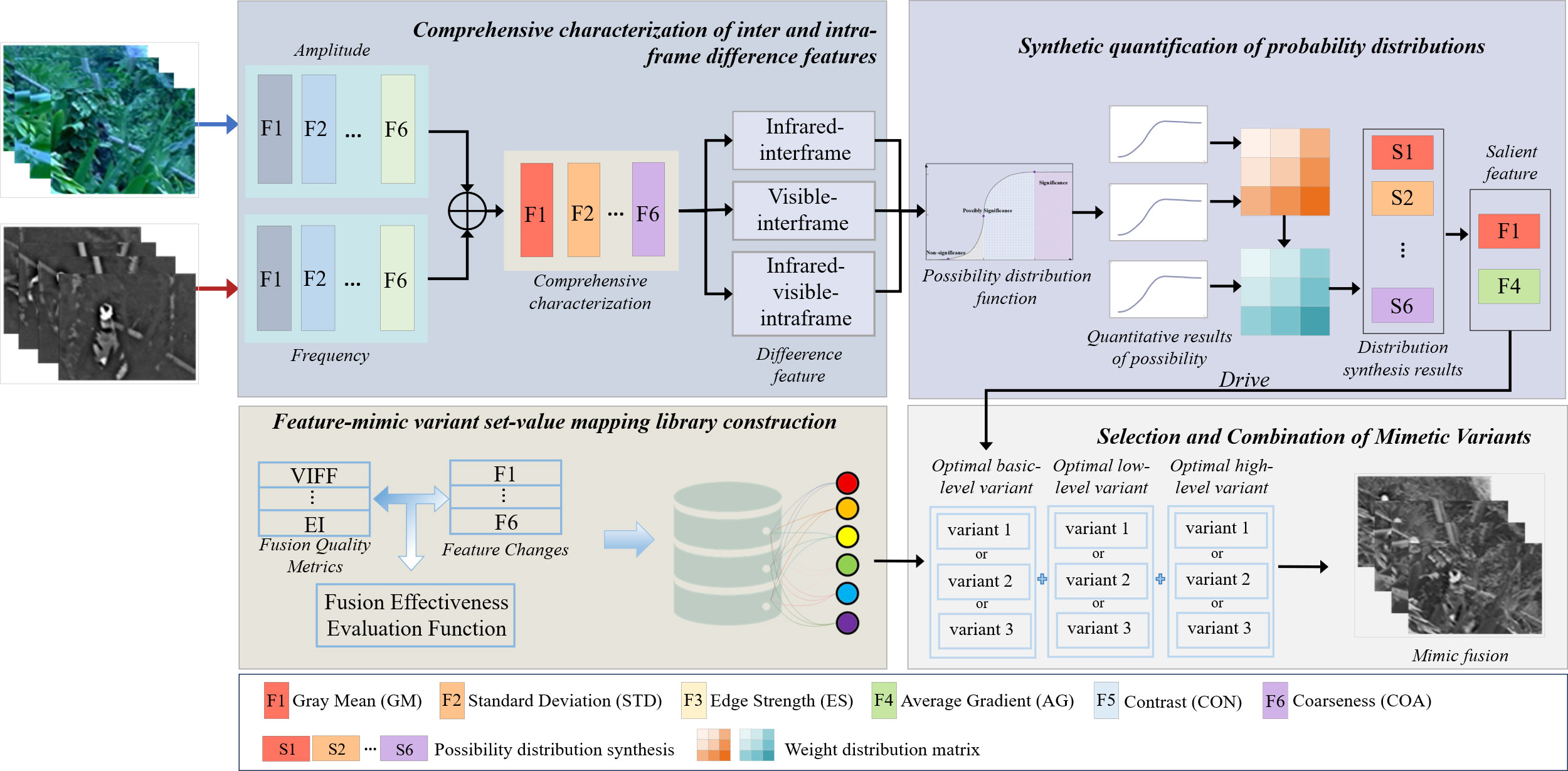
A Systematic Review on Real-time Detection of Small Obstacles Based on Multidimensional Information Fusion
Open Access | Research Article | 03 November 2025
Persymmetric Two-Step-Based Detectors for Range-Spread Targets against Compound-Gaussian Clutter
Chinese Journal of Information Fusion | Volume 2, Issue 4: 296-312, 2025 | DOI: 10.62762/CJIF.2025.664545
Abstract
This research addresses the challenge of detecting radar range-spread targets in compound-Gaussian clutter environments. In such scenarios, the target signals occupy unknown coordinates within a subspace, while the clutter is modeled as compound-Gaussian distribution involving inverse Gamma textures and complex Gaussian speckles with an unknown persymmetric covariance matrix. Additionally, we assume the availability of training data for estimating clutter covariance matrix. Utilizing a two-step approach, three detectors are proposed according to the Gradient, Rao, and Wald tests, by taking advantage of the persymmetry of the clutter covariance matrix. Theoretical analyses demonstrate that th... More >

Graphical Abstract

Persymmetric Two-Step-Based Detectors for Range-Spread Targets against Compound-Gaussian Clutter
Open Access | Review Article | 30 October 2025 | Cited: Crossref logo  1
Research Progress and Prospect of Radar Data Intelligent Processing
Chinese Journal of Information Fusion | Volume 2, Issue 4: 275-295, 2025 | DOI: 10.62762/CJIF.2025.861974
Abstract
With the continuous expansion of the application field of artificial intelligence, radar data processing has also begun to fully enter the era of intelligence, and new achievements have emerged in the research fields of target detection, target tracking, and target recognition. At a time of rapid development of artificial intelligence technology, it is necessary to think about the future development of radar data intelligent processing. To this end, combining the research history and the superficial understanding of radar data intelligent processing in the past ten years, our team analyzes the main research progress and challenges of radar data intelligent processing, examines the new requir... More >

Graphical Abstract

Research Progress and Prospect of Radar Data Intelligent Processing
Open Access | Research Article | Feature Paper | 26 September 2025 | Cited: Crossref logo  4 , Scopus 3
MgEL: Quantum Entanglement-Inspired Evidence Fusion for Learning with Noisy Labels
Chinese Journal of Information Fusion | Volume 2, Issue 3: 253-274, 2025 | DOI: 10.62762/CJIF.2025.151851
Abstract
With the rise of data engineering-driven automatic annotation strategies, deep learning has demonstrated remarkable performance and strong competitiveness in intelligent fault diagnosis. However, the inherent limitations of automatic annotators inevitably introduce noisy labels, which in turn hinder the generalization and accuracy of diagnostic models. Although numerous Learning with Noisy Labels (LNL) methods attempt to alleviate the impact of label noise through sample selection or label correction, most rely heavily on model predictions to guide training. This self-reinforcing mechanism frequently leads to confirmation bias, especially under high-noise conditions, thereby limiting their e... More >

Graphical Abstract
MgEL: Quantum Entanglement-Inspired Evidence Fusion for Learning with Noisy Labels
Open Access | Research Article | 25 September 2025
Lightweight Mura Defect Detection via Semantic Interscale Integration and Neighbor Fusion
Chinese Journal of Information Fusion | Volume 2, Issue 3: 237-252, 2025 | DOI: 10.62762/CJIF.2025.864944
Abstract
Considering the large-area distribution, smooth brightness gradients, and blurred boundaries of Mura defects in real industrial scenarios, as well as the challenge of balancing accuracy and efficiency in existing methods, we propose a lightweight deep learning-based detection method for large-area Mura defects, termed SIFNet. The SIFNet adopts a classical encoder-decoder architecture with MobileNet-V2 as the backbone. Furthermore, we design a Graph-based Semantic Interscale-fusion Block (GSIB) that integrates the Semantic Fluid Aggregation Module (SFAM) and the Semantic Graph Inference Module (SGIM) to collaboratively extract high-level semantic features across multiple scales and establish... More >

Graphical Abstract
Lightweight Mura Defect Detection via Semantic Interscale Integration and Neighbor Fusion

Journal Statistics

196
Authors
16
Countries / Regions
49
Articles
Scopus: 143
Citations
2024
Published Since
205,248
Article Views
32,736
Article Downloads
Chinese Journal of Information Fusion
eISSN: 2998-3371 | pISSN: 2998-3363
Crossref
Crossref
Member of Crossref
Visit Crossref →
Portico
Portico
All published articles are preserved here permanently
View Archive →