
Time Dependent Algorithm using Modified Three-Point Superclass of Block Backward Differentiation Formula for Solving Stiff Ordinary Differential Equations




Article Information
Abstract
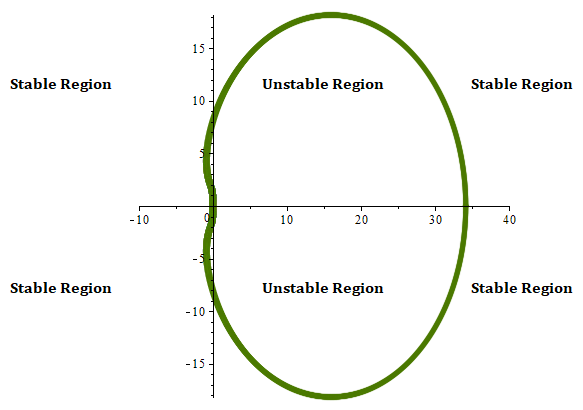
In this paper, we present a modified three-point superclass of Block Backward Differentiation Formula (BBDF) for the efficient numerical solution of stiff systems of ordinary differential equations (ODEs). The principal enhancement of this work is a structural modification of the classical BBDF that forms a new parameterized superclass of methods, leading to improved stability and reduced error constants compared with the standard three-point BBDFs. The proposed scheme is formulated as a fully implicit block method capable of simultaneously producing three solution approximations within each integration step. A detailed theoretical analysis is conducted to establish the order of accuracy, consistency, zero-stability, and convergence of the method. Stability analysis based on Dahlquist test equation confirms that the scheme is A-stable and suitable for a wide range of stiff ODEs. The nonlinear systems arising from the implicit formulation are efficiently solved using Newton iteration. Numerical experiments on benchmark stiff ODE problems, including systems with rapidly decaying transient components, demonstrate that the modified three-point superclass BBDF achieves higher accuracy and lower computational cost when compared with existing block implicit methods, such as the standard BBDF and diagonally implicit three-point block BDF schemes. Overall, the proposed method provides a robust and computationally efficient alternative for the numerical integration of stiff ODEs, with potential applications in chemical kinetics, control theory, and biological modeling.
Graphical Abstract
Keywords
Data Availability Statement
Funding
Conflicts of Interest
AI Use Statement
Ethical Approval and Consent to Participate
References
- Shampine, L. F., & Gear, C. W. (1979). A user’s view of solving stiff ordinary differential equations. SIAM review, 21(1), 1-17.
[CrossRef] [Google Scholar] - Dameris, M., Grewe, V., Ponater, M., Deckert, R., Eyring, V., Mager, F., ... & Giorgetta, M. A. (2005). Long-term changes and variability in a transient simulation with a chemistry-climate model employing realistic forcing. Atmospheric Chemistry and Physics, 5(8), 2121-2145.
[CrossRef] [Google Scholar] - Zhao, Z., Tan, D., & Li, K. (2019). Transient behaviors of multiscale megawatt power electronics systems—Part I: Characteristics and analysis. IEEE Journal of Emerging and Selected Topics in Power Electronics, 7(1), 7-17.
[CrossRef] [Google Scholar] - Subedi, S., Rauniyar, M., Ishaq, S., Hansen, T. M., Tonkoski, R., Shirazi, M., ... & Cicilio, P. (2021). Review of methods to accelerate electromagnetic transient simulation of power systems. IEEE access, 9, 89714-89731.
[CrossRef] [Google Scholar] - Lambert, J. D. (1973). Computational Methods in Ordinary Differential Equations. Chichester, New York: Wiley.
[Google Scholar] - Ibrahim, Z. B., Ijam, H. M., Aksah, S. J., & Abd Rasid, N. (2024). Enhancing accuracy and efficiency in stiff ODE integration using variable step diagonal BBDF approaches. Malaysian Journal of Fundamental and Applied Sciences, 20(5), 1083-1100.
[CrossRef] [Google Scholar] - Gear, C. W. (1971). Numerical Initial Value Problems in Ordinary Differential Equations. London: Prentice-Hall.
[Google Scholar] - Wanner, G., & Hairer, E. (1996). Solving ordinary differential equations II (Vol. 375, p. 98). New York: Springer Berlin Heidelberg.
[Google Scholar] - Alexander, R. (1977). Diagonally implicit Runge–Kutta methods for stiff ODE's. SIAM Journal on Numerical analysis, 14(6), 1006-1021.
[CrossRef] [Google Scholar] - Rothe, S., Hamkar, A. W., Quint, K. J., & Hartmann, S. (2012). Comparison of diagonal-implicit, linear-implicit and half-explicit Runge–Kutta methods in non-linear finite element analyses. Archive of Applied Mechanics, 82(8), 1057-1074.
[CrossRef] [Google Scholar] - Mahnken, R., & Westermann, H. (2024). Construction of A-stable explicit last-stage diagonal implicit Runge–Kutta (ELDIRK) methods. Computational Mechanics, 74(3), 485-507.
[CrossRef] [Google Scholar] - Ferracina, L., & Spijker, M. N. (2008). Strong stability of singly-diagonally-implicit Runge–Kutta methods. Applied Numerical Mathematics, 58(11), 1675-1686.
[CrossRef] [Google Scholar] - Liu, X., Xia, Y., Luo, H., & Xuan, L. (2016). A comparative study of Rosenbrock-type and implicit Runge-Kutta time integration for discontinuous Galerkin method for unsteady 3D compressible Navier-Stokes equations. Communications in Computational Physics, 20(4), 1016-1044.
[CrossRef] [Google Scholar] - Hazizah, M. I., Saufianin, J. A., Ahmad, F. N. R., Norshakila, A. R., Athraa, A., Nurul, H. M. A., & Fatimah, H. (2024). Numerical Solutions of Stiff Chemical Reaction Problems using Hybrid Block Backward Differentiation Formula . Journal of Advanced Research in Numerical Heat Transfer, 25(1), 100–115.
[CrossRef] [Google Scholar] - Azhari, N. A. I., Abd Rasid, N., Ijam, H. M., Arsad, R., Kamal, M. H. A., Salih, N. M., & Aksah, S. J. (2025). Designing an implicit Block Backward Differentiation Formula (BBDF) for stiff ordinary differential equations. Data Analytics and Applied Mathematics (DAAM), 16-30.
[CrossRef] [Google Scholar] - Mohd Ijam, H., & Ibrahim, Z. B. (2019). Diagonally implicit block backward differentiation formula with optimal stability properties for stiff ordinary differential equations. Symmetry, 11(11), 1342.
[CrossRef] [Google Scholar] - Gupta, G. K., Sacks-Davis, R., & Tescher, P. E. (1985). A review of recent developments in solving ODEs. ACM Computing Surveys (CSUR), 17(1), 5-47.
[CrossRef] [Google Scholar] - Byrne, G. D., & Hindmarsh, A. C. (1987). Stiff ODE solvers: A review of current and coming attractions. Journal of Computational physics, 70(1), 1-62.
[CrossRef] [Google Scholar] - Gear, C. W., & Watanabe, D. S. (1974). Stability and convergence of variable order multistep methods. SIAM Journal on Numerical Analysis, 11(5), 1044-1058.
[CrossRef] [Google Scholar] - Ibrahim, Z. B., Othman, K. I., & Suleiman, M. (2007). Implicit r-point block backward differentiation formula for solving first-order stiff ODEs. Applied Mathematics and Computation, 186(1), 558-565.
[CrossRef] [Google Scholar] - Suleiman, M. B., Musa, H., Ismail, F., Senu, N., & Ibrahim, Z. B. (2014). A new superclass of block backward differentiation formula for stiff ordinary differential equations. Asian-european journal of mathematics, 7(01), 1350034.
[CrossRef] [Google Scholar] - Musa, H., Suleiman, M. B., Ismail, F., Senu, N., & Ibrahim, Z. B. (2013). An accurate block solver for stiff initial value problems. International Scholarly Research Notices, 2013(1), 567451.
[CrossRef] [Google Scholar] - Nasarudin, A. A., Ibrahim, Z. B., & Rosali, H. (2020). On the integration of stiff ODEs using block backward differentiation formulas of order six. Symmetry, 12(6), 952.
[CrossRef] [Google Scholar] - Singla, R., Singh, G., Ramos, H., & Kanwar, V. (2023). Development of a Higher-Order $\mathcal{A$-Stable Block Approach with Symmetric Hybrid Points and an Adaptive Step-Size Strategy for Integrating Differential Systems Efficiently. Symmetry, 15(9), 1635.
[CrossRef] [Google Scholar] - Yakubu, S. D., & Sibanda, P. (2025). A novel one-step optimized hybrid block method for solving general second-order ordinary differential equations. Recent Advances in Natural Sciences, 135-135.
[CrossRef] [Google Scholar] - Söderlind, G. (2002). Automatic control and adaptive time-stepping. Numerical Algorithms, 31(1), 281-310.
[CrossRef] [Google Scholar] - Hochbruck, M., & Ostermann, A. (2010). Exponential integrators. Acta Numerica, 19, 209-286.
[CrossRef] [Google Scholar] - Prothero, A., & Robinson, A. (1974). On the stability and accuracy of one-step methods for solving stiff systems of ordinary differential equations. Mathematics of Computation, 28(125), 145-162.
[CrossRef] [Google Scholar] - Huang, B., Xiao, A., & Zhang, G. (2021). IMPLICIT-EXPLICIT RUNGE-KUTTA-ROSENBROCK METHODS WITH ERROR ANALYSIS FOR NONLINEAR STIFF DIFFERENTIAL EQUATIONS. Journal of Computational Mathematics, 39(4), 569.
[CrossRef] [Google Scholar] - Butcher, J. C. (2000). Numerical methods for ordinary differential equations in the 20th century. Journal of Computational and Applied Mathematics, 125(1-2), 1-29.
[CrossRef] [Google Scholar] - Suleiman, M. B., Musa, H., Ismail, F., & Senu, N. (2013). A new variable step size block backward differentiation formula for solving stiff initial value problems. International Journal of Computer Mathematics, 90(11), 2391-2408.
[CrossRef] [Google Scholar] - Martín-Vaquero, J., & Vigo-Aguiar, J. (2007). Adapted BDF algorithms: higher-order methods and their stability. Journal of Scientific Computing, 32(2), 287-313.
[CrossRef] [Google Scholar] - Vijitha, H. Y. K. (1985). Variable stepsize variable order multistep methods for stiff ordinary differential equations (Doctoral dissertation). Iowa State University.
[Google Scholar] - Dahlquist, G. G. (1963). A special stability problem for linear multistep methods. BIT Numerical Mathematics, 3(1), 27-43.
[CrossRef] [Google Scholar] - Aminikhah, H., & Hemmatnezhad, M. (2011). An effective modification of the homotopy perturbation method for stiff systems of ordinary differential equations. Applied Mathematics Letters, 24(9), 1502-1508.
[CrossRef] [Google Scholar] - Wu, X. Y. (1998). A sixth-order A-stable explicit one-step method for stiff systems. Computers & Mathematics with Applications, 35(9), 59-64.
[CrossRef] [Google Scholar] - Alhassan, B., Yusuf, H., & Adamu, A. (2024). Analysis of convergence and stability properties of diagonally implicit 3-point block backward differentiation formula for first order stiff initial value problems. UMYU scientifica, 3(2), 202-210.
[CrossRef] [Google Scholar]
Cite This Article
TY  - JOUR
AU  - Alhassan, Buhari
AU  - Saadu, Abubakar Sadiq
AU  - Musa, Hamisu
PY  - 2026
DA  - 2026/03/04
TI  - Time Dependent Algorithm using Modified Three-Point Superclass of Block Backward Differentiation Formula for Solving Stiff Ordinary Differential Equations
JO  - ICCK Journal of Applied Mathematics
T2  - ICCK Journal of Applied Mathematics
JF  - ICCK Journal of Applied Mathematics
VL  - 2
IS  - 1
SP  - 87
EP  - 110
DO  - 10.62762/JAM.2026.213905
UR  - https://www.icck.org/article/abs/jam.2026.213905
KW  - block backward differentiation formula
KW  - stiff ODEs
KW  - convergence
KW  - consistency
KW  - a-stability
AB  - In this paper, we present a modified three-point superclass of Block Backward Differentiation Formula (BBDF) for the efficient numerical solution of stiff systems of ordinary differential equations (ODEs). The principal enhancement of this work is a structural modification of the classical BBDF that forms a new parameterized superclass of methods, leading to improved stability and reduced error constants compared with the standard three-point BBDFs. The proposed scheme is formulated as a fully implicit block method capable of simultaneously producing three solution approximations within each integration step. A detailed theoretical analysis is conducted to establish the order of accuracy, consistency, zero-stability, and convergence of the method. Stability analysis based on Dahlquist test equation confirms that the scheme is A-stable and suitable for a wide range of stiff ODEs. The nonlinear systems arising from the implicit formulation are efficiently solved using Newton iteration. Numerical experiments on benchmark stiff ODE problems, including systems with rapidly decaying transient components, demonstrate that the modified three-point superclass BBDF achieves higher accuracy and lower computational cost when compared with existing block implicit methods, such as the standard BBDF and diagonally implicit three-point block BDF schemes. Overall, the proposed method provides a robust and computationally efficient alternative for the numerical integration of stiff ODEs, with potential applications in chemical kinetics, control theory, and biological modeling.
SN  - 3068-5656
PB  - Institute of Central Computation and Knowledge
LA  - English
ER  -
@article{Alhassan2026Time,
  author = {Buhari Alhassan and Abubakar Sadiq Saadu and Hamisu Musa},
  title = {Time Dependent Algorithm using Modified Three-Point Superclass of Block Backward Differentiation Formula for Solving Stiff Ordinary Differential Equations},
  journal = {ICCK Journal of Applied Mathematics},
  year = {2026},
  volume = {2},
  number = {1},
  pages = {87-110},
  doi = {10.62762/JAM.2026.213905},
  url = {https://www.icck.org/article/abs/jam.2026.213905},
  abstract = {In this paper, we present a modified three-point superclass of Block Backward Differentiation Formula (BBDF) for the efficient numerical solution of stiff systems of ordinary differential equations (ODEs). The principal enhancement of this work is a structural modification of the classical BBDF that forms a new parameterized superclass of methods, leading to improved stability and reduced error constants compared with the standard three-point BBDFs. The proposed scheme is formulated as a fully implicit block method capable of simultaneously producing three solution approximations within each integration step. A detailed theoretical analysis is conducted to establish the order of accuracy, consistency, zero-stability, and convergence of the method. Stability analysis based on Dahlquist test equation confirms that the scheme is A-stable and suitable for a wide range of stiff ODEs. The nonlinear systems arising from the implicit formulation are efficiently solved using Newton iteration. Numerical experiments on benchmark stiff ODE problems, including systems with rapidly decaying transient components, demonstrate that the modified three-point superclass BBDF achieves higher accuracy and lower computational cost when compared with existing block implicit methods, such as the standard BBDF and diagonally implicit three-point block BDF schemes. Overall, the proposed method provides a robust and computationally efficient alternative for the numerical integration of stiff ODEs, with potential applications in chemical kinetics, control theory, and biological modeling.},
  keywords = {block backward differentiation formula, stiff ODEs, convergence, consistency, a-stability},
  issn = {3068-5656},
  publisher = {Institute of Central Computation and Knowledge}
}
Article Metrics
Publisher's Note
ICCK stays neutral with regard to jurisdictional claims in published maps and institutional affiliations.
Rights and Permissions
 Copyright © 2026 by the Author(s). Published by Institute of Central Computation and Knowledge. This article is an open access article distributed under the terms and conditions of the Creative Commons Attribution (CC BY) license (https://creativecommons.org/licenses/by/4.0/), which permits use, sharing, adaptation, distribution and reproduction in any medium or format, as long as you give appropriate credit to the original author(s) and the source, provide a link to the Creative Commons licence, and indicate if changes were made.