


ISSN: 3069-1877
International Journal of Thermo-Fluid Systems and Sustainable Energy (IJTFSE) is a peer-reviewed, open-access journal that publishes high-quality original research, review articles, and technical notes in the fields of thermo-fluid sciences and sustainable energy systems.
DOI Prefix: 10.62762/IJTSSE

Journal Metrics

-
Impact Factor
-
CiteScore

Recent Articles

Open Access | Research Article | 28 December 2025
Mathematical Modeling of an Integrated Microbial Fuel Cell-Bioreactor System for Slaughterhouse Wastewater Treatment
International Journal of Thermo-Fluid Systems and Sustainable Energy | Volume 1, Issue 2: 96-107, 2025 | DOI: 10.62762/IJTSSE.2025.805399
Abstract
This study presents an analytical mathematical model for an integrated microbial fuel cell--oxic--anoxic bioreactor (MFC--OB--ANB) system designed for simultaneous slaughterhouse wastewater treatment and energy recovery. The model incorporates bioelectrochemical oxidation, nitrification, and denitrification processes using acetate as a representative substrate. Closed-form analytical solutions are derived for substrate degradation, nitrogen transformation, current density, and system voltage. The effects of biofilm thickness, membrane conductivity, and influent substrate concentration on treatment efficiency and power generation are systematically investigated. Results reveal that enhanced b... More >

Graphical Abstract
Mathematical Modeling of an Integrated Microbial Fuel Cell-Bioreactor System for Slaughterhouse Wastewater Treatment
Open Access | Research Article | 22 December 2025
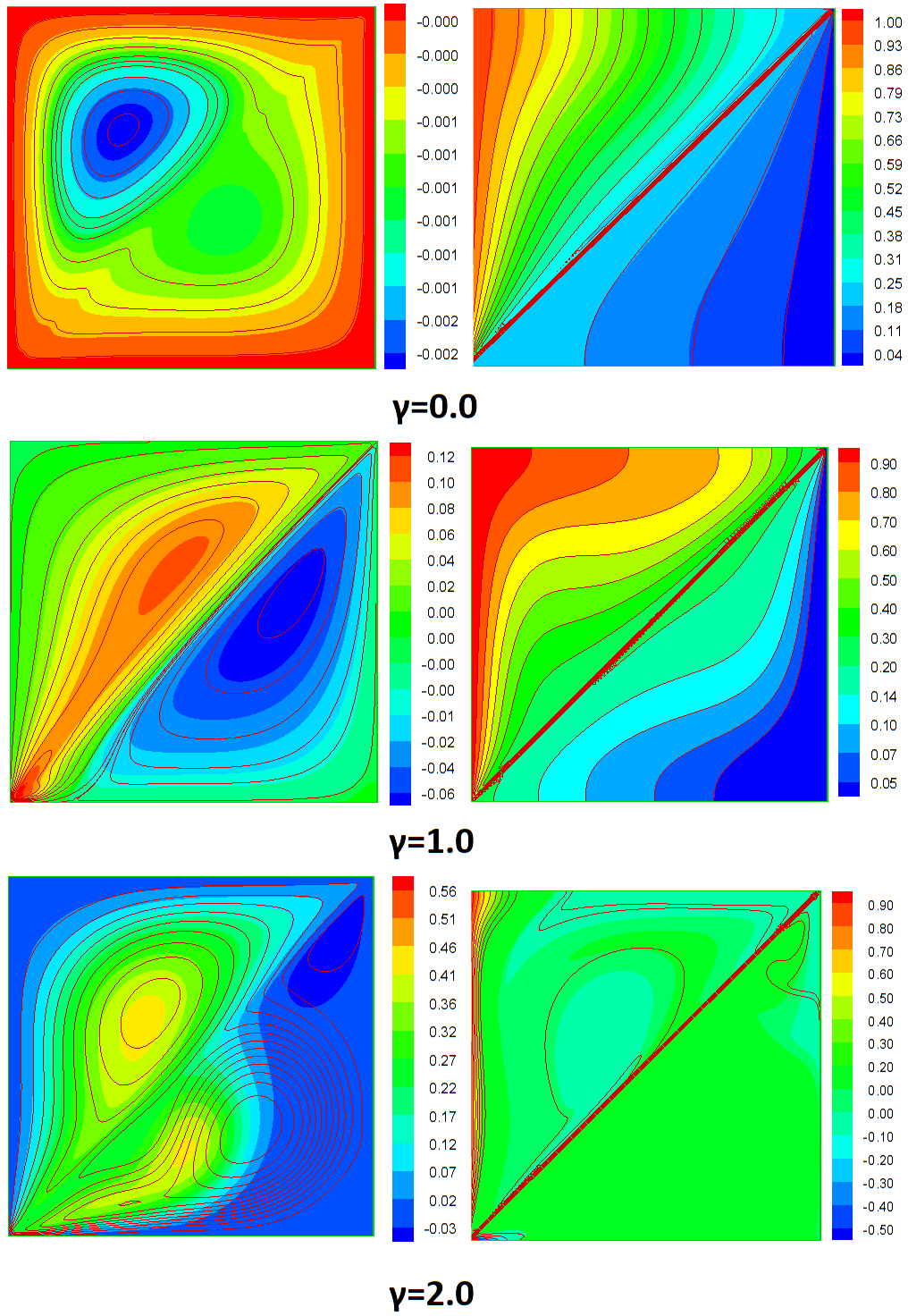
Thermal Cooling and System Irreversibilities of A Divergent/Convergent Channel with The Bioconvection Flow of Non-Newtonian Nanofluid
International Journal of Thermo-Fluid Systems and Sustainable Energy | Volume 1, Issue 2: 83-95, 2025 | DOI: 10.62762/IJTSSE.2025.318713
Abstract
The laminar bioconvection flow of a nanofluid in a convergent/divergent channel is computationally analyzed. The channel features impervious, adiabatic walls. A physics-based model couples the mass, momentum, and energy conservation equations. A thermal-hydraulic and entropy production analysis is performed using the first and second laws of thermodynamics to identify ideal parameters that maximize thermal performance while minimizing system irreversibility. Fluid flow, heat-mass transfer, motile microorganism density, and system entropy are investigated as functions of the channel angle. The governing equations are reduced via scaling and solved numerically using the Keller-Box method. Resu... More >

Graphical Abstract
Thermal Cooling and System Irreversibilities of A Divergent/Convergent Channel with The Bioconvection Flow of Non-Newtonian Nanofluid
Open Access | Research Article | 27 November 2025
Mathematical Study of Generalized Chemically Reactive NonNewtonain (Eyring-Powell) Material Capturing Varying Thermal Aspect Developing Cattaneo-Christov Concept
International Journal of Thermo-Fluid Systems and Sustainable Energy | Volume 1, Issue 2: 75-82, 2025 | DOI: 10.62762/IJTSSE.2025.438295
Abstract
This study investigates the effects of a nonlinear stretched surface in a two-dimensional Modified Eyring-Powell liquid due to a double stratified chemical reactive flow of non-Fourier heat flux. We study the flux model which is the generalized form of Fourier's classical expression with thermal relaxation time. The temperature-dependent thermal conductivity is taken into consideration and the stretched surface's thickness is variable. The similarity transformation approach is used to convert the governing system of PDEs into a collection of connected nonlinear ordinary differential systems. The resulting problems are tackled via the application of homotopy analysis approach. Skin friction c... More >

Graphical Abstract
Mathematical Study of Generalized Chemically Reactive NonNewtonain (Eyring-Powell) Material Capturing Varying Thermal Aspect Developing Cattaneo-Christov Concept
Open Access | Research Article | 25 November 2025
Multiple Slip Mechanism for Converging/Diverging Flow of Second Grade Nanofluids with Thermal Performance
International Journal of Thermo-Fluid Systems and Sustainable Energy | Volume 1, Issue 2: 64-74, 2025 | DOI: 10.62762/IJTSSE.2025.412468
Abstract
This study presents a comprehensive numerical investigation of the flow and heat transfer characteristics of a second-grade nanofluid in a converging/diverging channel, incorporating the significant effects of multiple slip mechanisms. The analysis considers velocity, thermal, and solutal slip conditions at the channel walls, providing a more realistic model of nanofluid behavior in micro-environments or with specific surface interactions. The governing equations, derived from the principles of conservation of mass, momentum, and energy, are formulated using a non-Newtonian second-grade fluid model to account for viscoelastic effects, combined with the Buongiorno model to capture the Brownia... More >

Graphical Abstract
Multiple Slip Mechanism for Converging/Diverging Flow of Second Grade Nanofluids with Thermal Performance
Open Access | Research Article | 22 November 2025
Thermal and Chemical Dynamics in Magnetohydrodynamic Williamson Fluid Flow over a Stretching Cylinder under Heat/Mass Flux Effects Using Optimal Homotopy Analysis Method
International Journal of Thermo-Fluid Systems and Sustainable Energy | Volume 1, Issue 2: 46-63, 2025 | DOI: 10.62762/IJTSSE.2025.383195
Abstract
The knowledge on understanding non-Newtonian fluid dynamics influences and behaviors in magnetic and nanoscale effects of transport is also important to the advanced processes of engineering. The current paper examines MHD flow and heat transfer of a Williamson nanofluid across a stretching cylindrical surface, taking into consideration Hall current and chemical reaction and non-Fourier heat and mass flux that is described by the Cattaneo Christov theory. The transport of Nanoparticles is explained in terms of Buongiorno model of thermophoresis and Brownian movement. Similarity variables are used to transform the governing nonlinear equations and then analytically solved via Optimal Homotopy... More >

Graphical Abstract
Thermal and Chemical Dynamics in Magnetohydrodynamic Williamson Fluid Flow over a Stretching Cylinder under Heat/Mass Flux Effects Using Optimal Homotopy Analysis Method
Open Access | Research Article | 24 August 2025
Heat and Momentum Transfer in MHD Boundary Layer Flow with Radiation and Heat Source/Sink Effects
International Journal of Thermo-Fluid Systems and Sustainable Energy | Volume 1, Issue 1: 39-45, 2025 | DOI: 10.62762/IJTSSE.2025.817838
Abstract
The porosity parameter serves as a pivotal factor in determining the resistance exerted by a porous medium on fluid motion, especially in magnetohydrodynamic (MHD) flows. This study presents a novel numerical investigation of the coupled influence of porosity, viscous dissipation, and Joule heating on both momentum and thermal boundary layers over a porous surface. The results demonstrate that increasing porosity enhances medium permeability, thereby reducing hydrodynamic drag and intensifying the velocity gradient near the stagnation region. Conversely, lower porosity impedes fluid penetration, resulting in diminished velocity and a compressed boundary layer structure. While the direct impa... More >

Graphical Abstract
Heat and Momentum Transfer in MHD Boundary Layer Flow with Radiation and Heat Source/Sink Effects
Open Access | Research Article | 22 August 2025
Three-Dimensional Nanofluid Flow with Convective and Slip Condition with Thermal Radiation Effect via Stretching/Shrinking Surface
International Journal of Thermo-Fluid Systems and Sustainable Energy | Volume 1, Issue 1: 30-38, 2025 | DOI: 10.62762/IJTSSE.2025.456595
Abstract
A numerical technique for the nonlinear thermal radiation effect on 3D (“Three Dimensional”) nanofluid (NFs) motion through shrinking or stretching surface with convective boundary condition is examined. In this investigation we use the convective and velocity slip conditions. The governing equations were converted into a set of couple non-linear ODE’s by suitable similarity transformations. The converted nonlinear equations are obtained by applying R-K-F (“Range-Kutta-Fehlberg”) procedure along with shooting technique. The physical parameters are explained graphically on velocity, temperature and concentration. Moreover, we found the coefficient of skin friction, rate of heat tran... More >

Graphical Abstract
Three-Dimensional Nanofluid Flow with Convective and Slip Condition with Thermal Radiation Effect via Stretching/Shrinking Surface
Open Access | Research Article | 21 August 2025
Parametric Analysis of Heat and Mass Transfer in Nanofluid Flow Through a Porous Channel with Brownian Motion and Thermophoresis Effects
International Journal of Thermo-Fluid Systems and Sustainable Energy | Volume 1, Issue 1: 16-29, 2025 | DOI: 10.62762/IJTSSE.2025.261546
Abstract
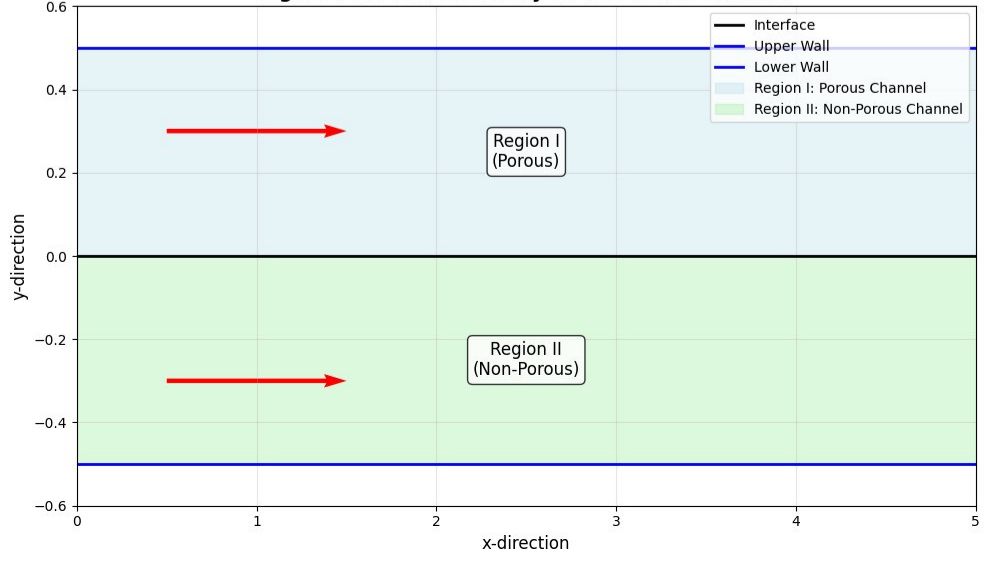
This study investigates the combined effects of porous medium properties, nanoparticle dynamics, and fluid characteristics on heat and mass transfer in nanofluid flow through a channel bounded by permeable walls. A comprehensive mathematical model is developed incorporating the Brinkman–Darcy momentum equation, energy and nanoparticle concentration equations, and key nanofluid transport mechanisms such as Brownian motion and thermophoresis. The resulting nonlinear boundary value problem is solved numerically using a robust BVP4C approach in MATLAB. Parametric analyses are conducted to assess the influence of the Schmidt number (Sc), porosity parameter (λ), Darcy number (Dc), Prandtl num... More >

Graphical Abstract
Parametric Analysis of Heat and Mass Transfer in Nanofluid Flow Through a Porous Channel with Brownian Motion and Thermophoresis Effects
Open Access | Research Article | 20 August 2025
Dynamic Behavior of Cu–Water and Al2O3–Water Nanofluids in a Thermally Radiative MHD Flow Over a Porous Channel
International Journal of Thermo-Fluid Systems and Sustainable Energy | Volume 1, Issue 1: 3-15, 2025 | DOI: 10.62762/IJTSSE.2025.532667
Abstract
This study describes convective temperature and mass transport in a magnetohydrodynamic nanofluid moving via an absorbing channel stretched across an extensive region while being influenced by a securing region. The analytical framework incorporates a multitude of factors including heat generation, thermal radiation effects, viscous dissipation, and chemical reaction implications. The influences of porosity, warm production, thermal emission, attractive fields, sticky indulgence, and substance reactions on the flow dynamics are absolutely expounded across a spectrum of governing parameters. Furthermore, it is posited that regulation can be applied to the nanoparticle volume segment at the bo... More >

Graphical Abstract
Dynamic Behavior of Cu–Water and  Al2O3–Water Nanofluids in a Thermally Radiative MHD Flow Over a Porous Channel
Open Access | Editorial | 29 June 2025
Editorial: Bridging Thermo-Fluid Science and Sustainability for a Resilient Future
International Journal of Thermo-Fluid Systems and Sustainable Energy | Volume 1, Issue 1: 1-2, 2025 | DOI: 10.62762/IJTSSE.2025.427436
Abstract
The era of climate urgency and accelerating technological transformation demands more than incremental advances-it calls for integrative, system-level innovations across the energy, environment, and manufacturing sectors. Thermo-fluid systems lie at the heart of this transition, powering innovations in clean energy, efficient thermal management, carbon capture, and sustainable industrial processes. The International Journal of Thermo-Fluid Systems and Sustainable Energy launches at this critical intersection, offering a dedicated platform to channel cutting-edge research into impactful, scalable solutions. More >

Journal Statistics

31
Authors
5
Countries / Regions
10
Articles
0
Citations
2025
Published Since
0
Special Issues
2,914
Article Views
1,435
Article Downloads
International Journal of Thermo-Fluid Systems and Sustainable Energy
eISSN: 3069-1877
Crossref
Crossref
Member of Crossref
Visit Crossref →